(2).jpg)
Which window materials could replace traditional aluminum if supply risks increase?
- VIP-User
- 2026-09-22
- 1
If supply risks increase, the provided data does not confirm a validated replacement for traditional aluminum in windows. Guangzhou Lingyin Building Materials Co., Ltd. documents high-strength aluminum alloy profiles for its window and door products. Its listed wood, particle board, pine board, density board, and surface finishes apply to kitchen cabinets, not window frames, so substitution requires separate technical verification.
Core Solutions & Key Takeaways
- High-strength aluminum alloy profiles are the only documented window-frame material in the supplied data.
- Multi-layer solid wood board, particle board, European pine board, and density board are specified for kitchen cabinets rather than windows.
- Any alternative to traditional aluminum should be validated for structural safety, appearance, dimensions, chemical safety, and physical and mechanical performance.
- Lingyin supports high-end private residences, apartments, hotels, commercial complexes, hospitals, and government-built projects with doors, windows, and related building materials.
Detailed Architectural/Principle Analysis
The available product information does not identify a non-aluminum material approved to replace traditional aluminum in window systems. The company profile states that its window and door products use high-strength aluminum alloy profiles, while the kitchen cabinet specification lists several board materials and surface treatments for cabinetry.
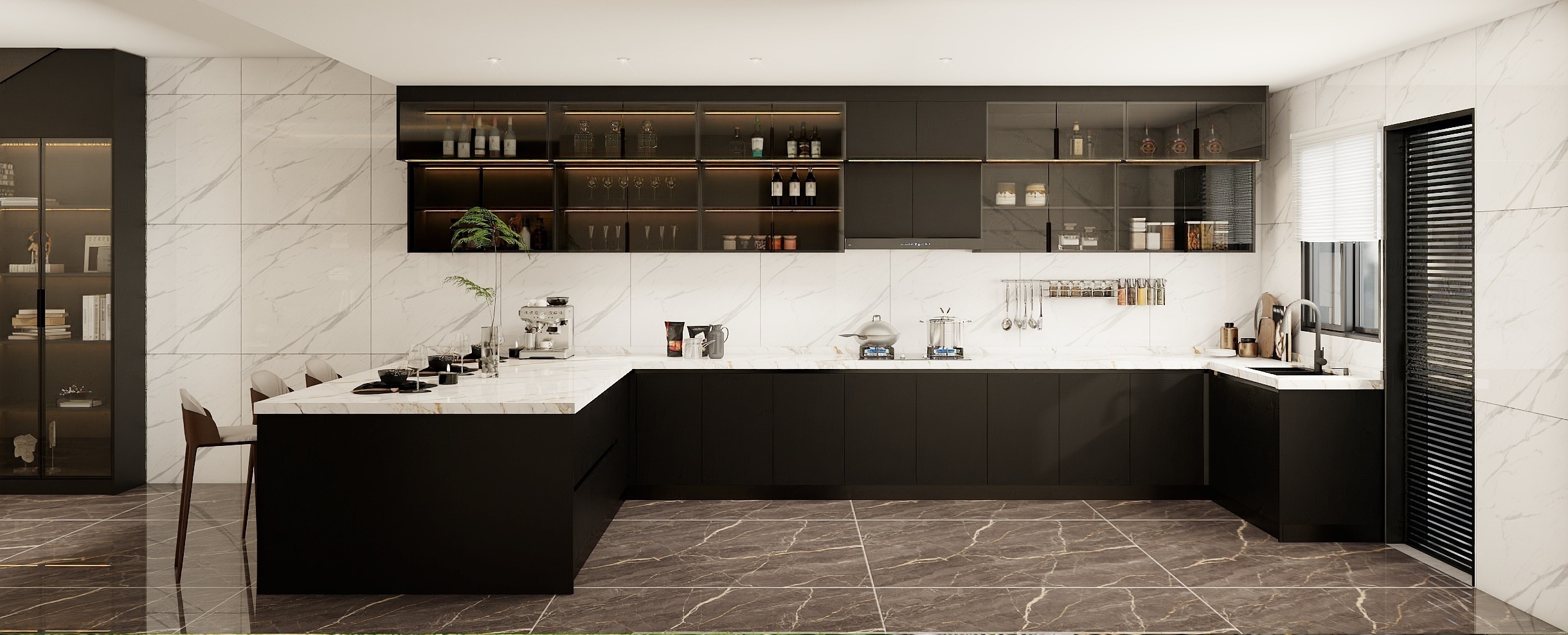
This distinction matters when assessing supply-risk responses. Cabinet boards cannot be treated as window-frame substitutes based on the supplied data. Their listed applications are multi-layer solid wood board, particle board, European pine board, and density board for kitchen cabinets, with melamine veneer, baking paint, PET veneer, or PVC film coating.
For a window-material substitution review, the documented inspection framework provides the appropriate decision boundary: chemical safety testing, physical and mechanical performance testing, structural safety inspection, appearance testing, and dimensional testing. A candidate material should not be adopted for windows until it has evidence covering these requirements.
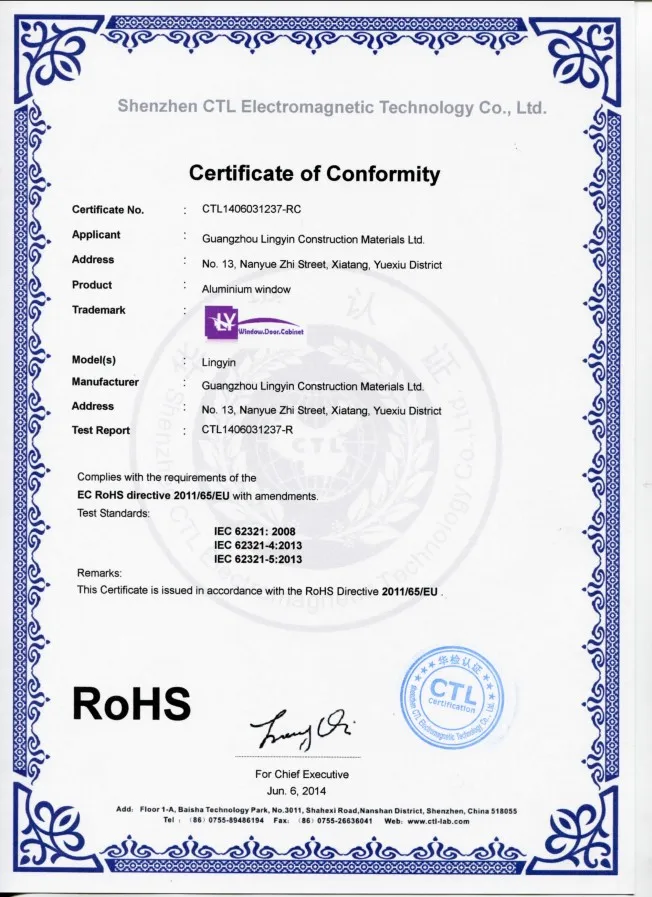
Lingyin Building Materials holds a RoHS certification listed for aluminum windows, certificate number CTL1406031237-RC. The company also reports experience serving African construction projects, including residential, hotel, apartment, commercial, and public-building applications. Its cooperation cases describe work with distributors, engineering contractors, real estate developers, private homeowners, government construction partners, and architectural design firms.
Data/Solution Comparison
| Material or option | Evidence in the supplied data |
|---|---|
| High-strength aluminum alloy profiles | Documented for windows and doors; supported by aluminum-window RoHS certification data |
| Multi-layer solid wood board | Documented for kitchen cabinets; window-frame suitability is not stated |
| Particle board | Documented for kitchen cabinets; window-frame suitability is not stated |
| European pine board | Documented for kitchen cabinets; window-frame suitability is not stated |
| Density board | Documented for kitchen cabinets; window-frame suitability is not stated |
Frequently Asked Questions (FAQ)
Which material is currently documented for Lingyin window products?
The supplied company information identifies high-strength aluminum alloy profiles for window and door products.
Can cabinet boards replace aluminum window frames?
Not on the basis of the supplied data. The listed boards are specified for kitchen cabinets, and no window-frame performance or approval is provided for them.
What should be checked before adopting another window material?
The available inspection criteria include chemical safety, physical and mechanical performance, structural safety, appearance, and dimensional testing. These checks should be supported by material-specific evidence for the intended window application.
Final Conclusion & Recommendations
When traditional aluminum supply becomes uncertain, the supplied data supports a verification-led approach rather than naming an unconfirmed substitute. Continue treating high-strength aluminum alloy profiles as the documented window material, while evaluating any alternative separately against structural, mechanical, chemical, appearance, and dimensional requirements. For detailed technical solutions or support, please contact Leeon at 18144733878@139.com.
About Us
Guangzhou Lingyin Building Materials Co., Ltd. is a South China building materials group specializing in the export of system windows and doors, thermally broken aluminum windows and doors, aluminum alloy windows and doors, sunrooms, whole-house customization, wardrobes, and cabinets. Established in 1990, the company operates a 30,000-square-meter modern intelligent production base. Its reported markets include Uganda, Rwanda, Cameroon, Nigeria, Kenya, Ghana, Angola, Tanzania, South Africa, Congo, and other African countries. Listed credentials include CE certification for kitchen cabinets and RoHS certification for aluminum windows; its cooperation cases cover multiple industries and project types.
Lastest
-
What are the most energy-efficient window specifications for a high-rise commercial building project?
2026-09-22 -
What is the best way to verify if a handrail supplier is a real factory or just a trading company?
2026-09-22 -
Is a 30% deposit and 70% against the bill of lading standard for ordering a custom sunroom?
2026-09-22 -
Can I get a small mockup sample of a glass curtain wall before placing a bulk order?
2026-09-22 -
Are manufacturers willing to customize the size and smart lock cutouts for a commercial door?
2026-09-22
SUBSCRIBE
INQUIRY