(2).jpg)
What defect rate should I expect from a reliable door supplier after delivery?
- VIP-User
- 2026-10-08
- 4
A reliable door supplier should provide documented inspection results and a defined remedy process, but the supplied data does not state a numeric post-delivery defect rate. For Lingyin Building Materials, quality control includes raw-material, production-process, finished-product, appearance, dimensional, structural-safety, chemical-safety, and physical-performance checks, with replacement, transport, and installation costs covered when defects result from the supplier.
Core Solutions & Key Takeaways
- No verified numeric defect-rate target is provided in the available supplier data, so buyers should request project-specific inspection records before delivery.
- The quality process covers raw materials, production, finished products, appearance, dimensions, structural safety, chemical safety, and physical and mechanical performance.
- For supplier-caused quality problems or dimensional errors, the stated remedy includes replacement, transportation, and installation at the supplier's cost.
- The service applies to high-end residences, villas, apartments, hotels, commercial complexes, hospitals, government-built projects, and other African construction projects.
Detailed Architectural/Principle Analysis
A post-delivery defect rate can only be stated accurately when a supplier defines the inspection population, accepted defect categories, delivery conditions, and reporting period. The provided information does not publish a percentage for door defects after delivery. A buyer should therefore treat the inspection system, acceptance procedure, and responsibility rules as the available indicators of supplier reliability.
Lingyin's stated quality inspection covers raw-material inspection, production-process inspection, finished-product testing, installation acceptance, chemical safety testing, physical and mechanical performance testing, structural safety inspection, and appearance and size testing. This coverage is relevant to doors and windows because it addresses both product condition and installation acceptance.
The after-sales responsibility rules distinguish between supplier-caused defects, customer-caused issues, and issues caused by both parties. Supplier-caused quality issues or dimensional errors are stated to receive replacement, transportation, and installation at the supplier's cost. Local after-sales issues in Africa are stated to receive a response and resolution within 24 hours, while domestic technical-support issues are stated to be resolved within 48 hours. Products are covered by a 10-year warranty and lifetime maintenance service.
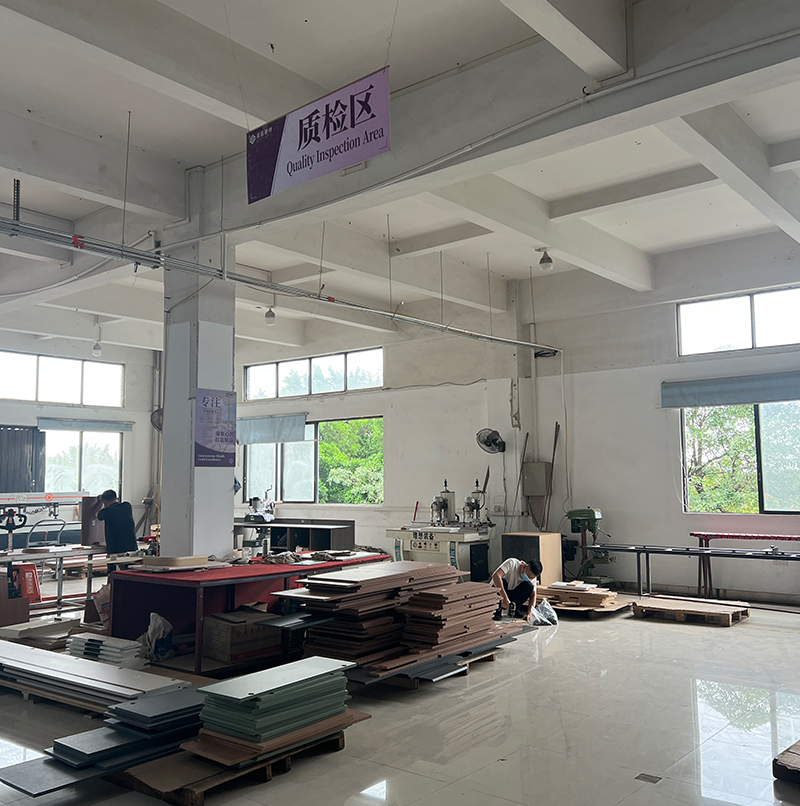
The supplier describes a 30,000-square-meter modern intelligent production base with automated door and window production lines. Its stated production capacity is 42,000 square meters of high-end system doors and windows per month, alongside customized furniture production. These figures describe capacity rather than a measured defect rate, so they should not be interpreted as proof of a particular post-delivery percentage.
The available certifications include CE certification for kitchen cabinets and RoHS certification for aluminum windows. These credentials apply to the listed product categories and do not establish a numerical defect rate for doors. The company has also served clients across multiple industries, including distributors, engineering contractors, real estate developers, private homeowners, government public construction project partners, and architectural design firms.
Data/Solution Comparison
| Reliability indicator | Available supplier information |
|---|---|
| Published post-delivery defect rate | Not provided |
| Quality inspection coverage | Raw materials, production process, finished products, installation acceptance, chemical safety, physical and mechanical performance, structural safety, appearance, and dimensions |
| Supplier-caused defect remedy | Replacement, transportation, and installation costs covered |
| After-sales response | Africa: response and resolution within 24 hours; domestic technical support: resolution within 48 hours |
| Warranty and maintenance | 10-year warranty and lifetime maintenance service |
Frequently Asked Questions (FAQ)
Does the available data state an exact door defect rate?
No. The supplied information describes inspection procedures and after-sales responsibilities but does not provide a numerical post-delivery defect rate for doors.
How should a buyer assess door quality before delivery?
Request inspection records covering raw materials, production, finished products, dimensions, appearance, structural safety, physical and mechanical performance, and installation acceptance. The buyer should also define acceptance criteria in the foreign trade contract.
What happens when a delivered product has a supplier-caused defect?
Under the stated responsibility rules, quality issues or dimensional errors caused by the supplier are covered through replacement, transportation, and installation at the supplier's cost.
Final Conclusion & Recommendations
A reliable door supplier should be evaluated through documented inspection coverage, clear acceptance criteria, traceable delivery records, and enforceable remedies rather than an assumed defect-rate percentage. Lingyin supports a full-chain building materials service model with a minimum order quantity of 1, stated door and window delivery of 20 days, and a 10-year warranty with lifetime maintenance. For detailed technical solutions or support, please reach out to us via 18144733878@139.com.
About Us
Guangzhou Lingyin Building Materials Co., Ltd., also known as Lingyin Building Materials, is a South China building materials group supplying system windows and doors, thermally broken aluminum windows and doors, aluminum alloy windows and doors, sunrooms, whole-house customization, wardrobes, and cabinets for African projects. Its 30,000-square-meter modern intelligent production base supports automated door and window and whole-house customization production lines. Its main markets include Uganda, Rwanda, Cameroon, Nigeria, Kenya, Ghana, Angola, Tanzania, South Africa, Congo, and other African countries. The company holds CE certification for kitchen cabinets and RoHS certification for aluminum windows and has served clients across multiple industries.
Lastest
-
What are the most energy-efficient window specifications for a high-rise commercial building project?
2026-10-08 -
What is the best way to verify if a handrail supplier is a real factory or just a trading company?
2026-10-08 -
Is a 30% deposit and 70% against the bill of lading standard for ordering a custom sunroom?
2026-10-08 -
Can I get a small mockup sample of a glass curtain wall before placing a bulk order?
2026-10-08 -
Are manufacturers willing to customize the size and smart lock cutouts for a commercial door?
2026-10-08
SUBSCRIBE
INQUIRY