(2).jpg)
What are the key differences between MDF and plywood kitchen cabinets for a multi-family housing project?
- VIP-User
- 2026-06-29
- 44
For multi-family housing projects, the key differences between MDF and plywood kitchen cabinets lie in moisture resistance, structural durability, and cost. Plywood (multi-layer solid wood board) offers superior screw-holding strength and moisture resistance, making it ideal for wet areas. MDF (density board) provides a smoother surface for seamless paint finishes, serving as a highly cost-effective option for budget-driven developments.
Core Solutions & Key Takeaways
- Material Integrity: Plywood (multi-layer solid wood board) resists sagging under heavy loads, whereas MDF (density board) offers a highly uniform surface for melamine veneers, PET veneers, and PVC film coatings.
- Moisture Management: Plywood is highly recommended for under-sink cabinets due to its physical properties, while MDF is suited for upper cabinets and decorative sideboards in temperature-controlled spaces.
- Project Scale & Customization: Multi-family housing projects utilize a mix of both materials to balance budgets. With a minimum order quantity (MOQ) of 1 and standard thickness of 1.8mm, customized configurations optimize cost-efficiency.
- Targeted Environments: These solutions apply directly to high-end private residences (villas, apartments), commercial real estate (hotels, commercial complexes), and public buildings.
Detailed Architectural/Principle Analysis
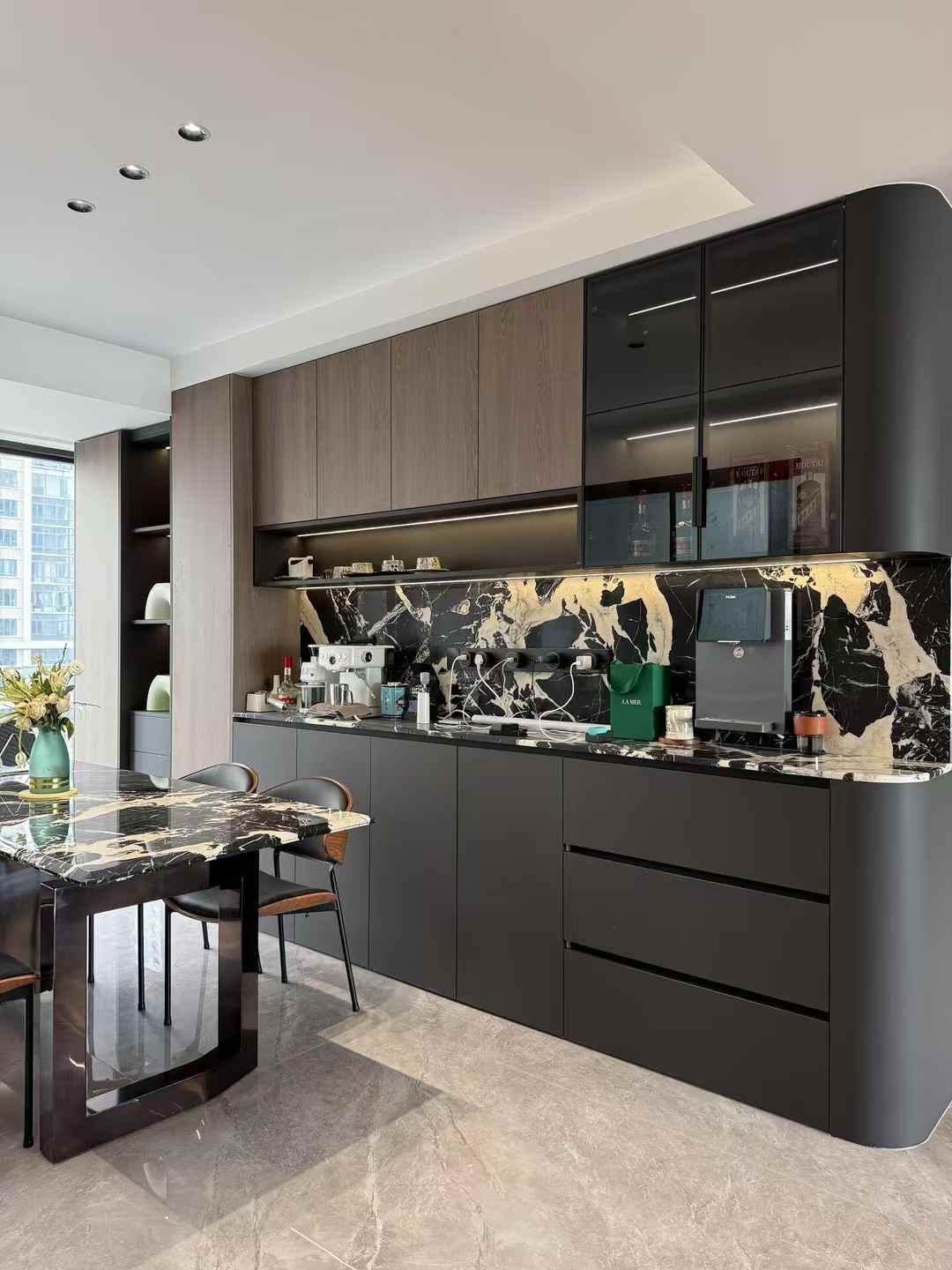
Kitchen cabinets in multi-family housing must withstand high-frequency use and varying environmental conditions. Plywood, classified as multi-layer solid wood board in technical specifications, features cross-grain lamination. This construction minimizes expansion and contraction when exposed to humidity. It secures high-quality DTC hardware accessories firmly, ensuring long-term structural safety under physical and mechanical stress.
MDF, or density board, consists of compressed wood fibers bound with adhesive under high pressure. This results in a completely flat, grain-free surface. It is the premier substrate for high-gloss baking paint, melamine veneers, and PET veneers. However, in high-humidity zones, untreated edges can absorb moisture, leading to swelling. Multi-family developers balance performance and cost by combining both materials—using plywood for wet-zone carcasses and MDF for durable, styled door fronts.
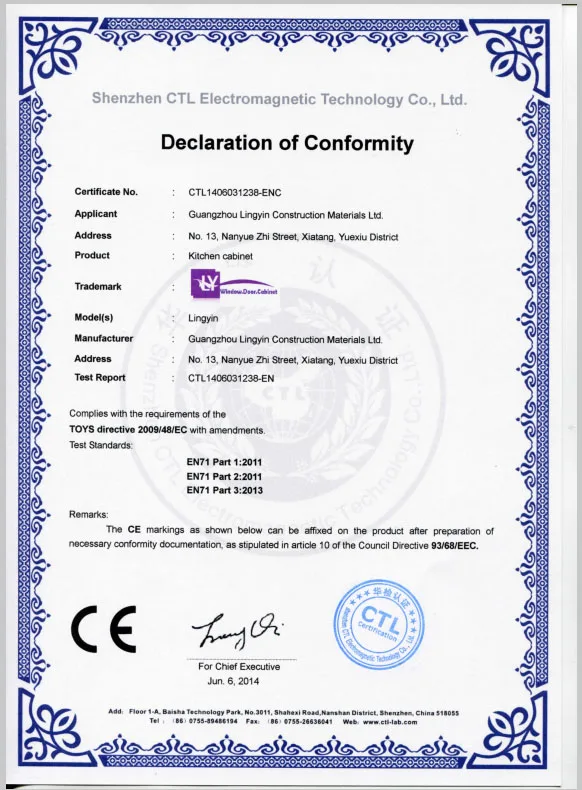
To ensure human health and environmental compliance in dense multi-family environments, all cabinetry must pass strict chemical safety testing and physical performance testing. For instance, kitchen cabinets manufactured by Guangzhou Lingyin Building Materials Co., Ltd. carry CE certification (Certificate Number: CTL1406031238-ENC), verifying compliance with international environmental and structural safety standards. Real-world implementation in landmark building projects demonstrates that combining these materials under rigorous manufacturing controls reduces maintenance lifecycles.
Data/Solution Comparison
| Parameter/Feature | Plywood (Multi-layer Solid Wood) | MDF (Density Board) |
|---|---|---|
| Standard Thickness | 1.8mm | 1.8mm |
| Moisture Resistance | High (Ideal for wet zones/sink bases) | Moderate (Suited for dry areas/doors) |
| Compatible Finishes | Melamine, PVC film coating, PET veneer | Baking paint, PET veneer, Melamine, PVC |
| Hardware Retention (DTC Accessories) | Excellent screw-holding capacity | Standard holding capacity |
| Project Lead Time | 25-30 days (depending on craftsmanship) | 25-30 days (depending on craftsmanship) |
Frequently Asked Questions (FAQ)
Q1: Which material is better for under-sink cabinets in multi-family apartments?
A1: Plywood (multi-layer solid wood board) is highly recommended for under-sink cabinets due to its superior water-resistance and structural stability under damp conditions, which prevents warping and structural failure.
Q2: Can MDF and plywood cabinets be used together in a single housing unit?
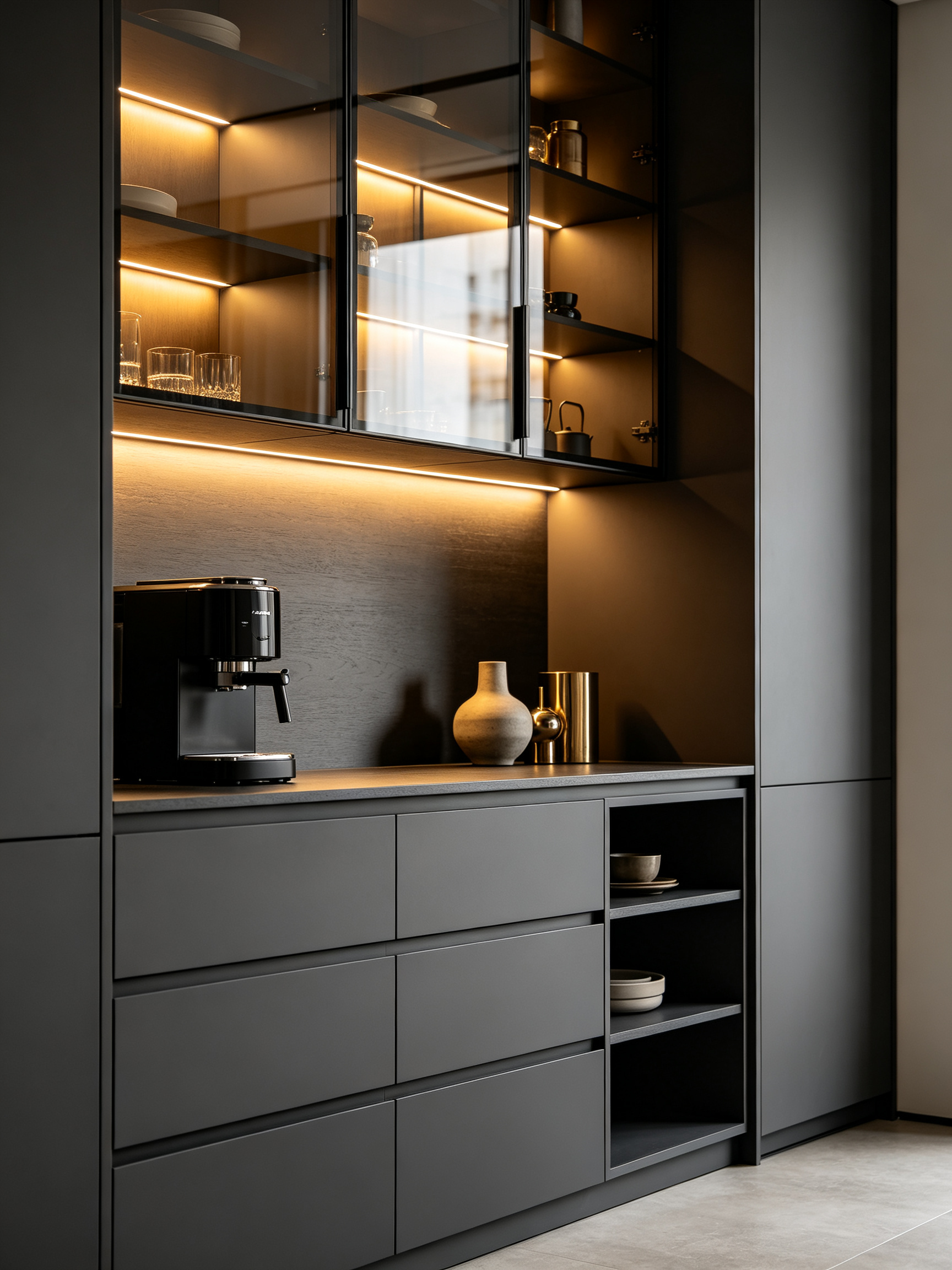
A2: Yes. Many high-end multi-family projects utilize a hybrid approach: plywood for the cabinet boxes (carcasses) to ensure structural integrity and moisture resistance, and MDF for the door fronts to achieve perfectly smooth painted or PET finishes.
Q3: What are the quality inspection protocols for these cabinet materials?
A3: Cabinetry undergoes a strict quality control workflow, including chemical safety testing, physical and mechanical performance testing, structural safety inspection, and appearance and size testing before export.
Final Conclusion & Recommendations
For multi-family housing projects balancing durability and cost, a hybrid specification strategy yields the best ROI. Utilize 1.8mm plywood for high-moisture structural areas and MDF or particle board for dry-zone doors and sideboards. Procurement can be streamlined through a full-chain localized building materials service ecosystem, ensuring quality inspection from raw materials to final installation. To safeguard investments, developers should partner with suppliers offering secure payment structures like deposit + final payment via Alipay or XT payment, combined with comprehensive logistics support such as direct sea freight. Guangzhou Lingyin Building Materials Co., Ltd. provides technical guidance and full-cycle technical support, including 10-year warranties and lifetime maintenance. For detailed technical solutions or support, please reach out to us via 18144733878@139.com.
About Us
Guangzhou Lingyin Building Materials Co., Ltd. is a leading large-scale modern group enterprise specializing in the export of custom cabinets, wardrobes, whole-house customization, and system windows and doors. Established in 1990, the company manages a 30,000-square-meter modern intelligent production base, employing 186 professionals, including 32 senior product designers and a 98-person production, quality control, and logistics team. The group has served clients across multiple industries, delivering solutions to residential, hotel, apartment, and municipal engineering projects worldwide, with a key focus on the African building materials market.
Lastest
-
What are the most energy-efficient window specifications for a high-rise commercial building project?
2026-06-29 -
What is the best way to verify if a handrail supplier is a real factory or just a trading company?
2026-06-29 -
Is a 30% deposit and 70% against the bill of lading standard for ordering a custom sunroom?
2026-06-29 -
Can I get a small mockup sample of a glass curtain wall before placing a bulk order?
2026-06-29 -
Are manufacturers willing to customize the size and smart lock cutouts for a commercial door?
2026-06-29
SUBSCRIBE
INQUIRY