(2).jpg)
Is it possible to customize the hardware prep on commercial doors?
- VIP-User
- 2026-07-12
- 46
Customizing the hardware prep on commercial doors is entirely possible and highly recommended to meet specific security, access control, and architectural requirements. Standard commercial doors can be precision-machined during manufacturing to accommodate various custom locks, exit devices, hinges, pivots, and electronic access control systems, ensuring seamless field installation and structural integrity.
Core Solutions & Key Takeaways
- Factory-Engineered Customization: Professional door manufacturers utilize automated machinery to prep doors for specific hardware templates, avoiding the need for imprecise on-site modifications.
- Broad Compatibility: Custom preparations support mortise locks, cylindrical locks, concealed closers, continuous hinges, and heavy-duty exit devices.
- Application Versatility: Tailored hardware preparation is vital for high-end private residences, commercial real estate such as hotels and complexes, and public buildings like hospitals.
- Preserved Structural Integrity: Factory-prepped doors maintain their original fire ratings, physical and mechanical performance, and structural safety.
Detailed Architectural/Principle Analysis
Custom hardware preparation begins during the engineering design phase. Before production, technical teams analyze the hardware templates provided by the client or architectural hardware consultants. These templates dictate the exact dimensions for lock cases, faceplates, strike plates, wire raceways, and hinge mortises. In modern manufacturing, CNC machinery routes and drills the door substrates with millimeter-level precision. This prevents misalignment issues that frequently lead to latch binding, accelerated wear, or security failures on-site.
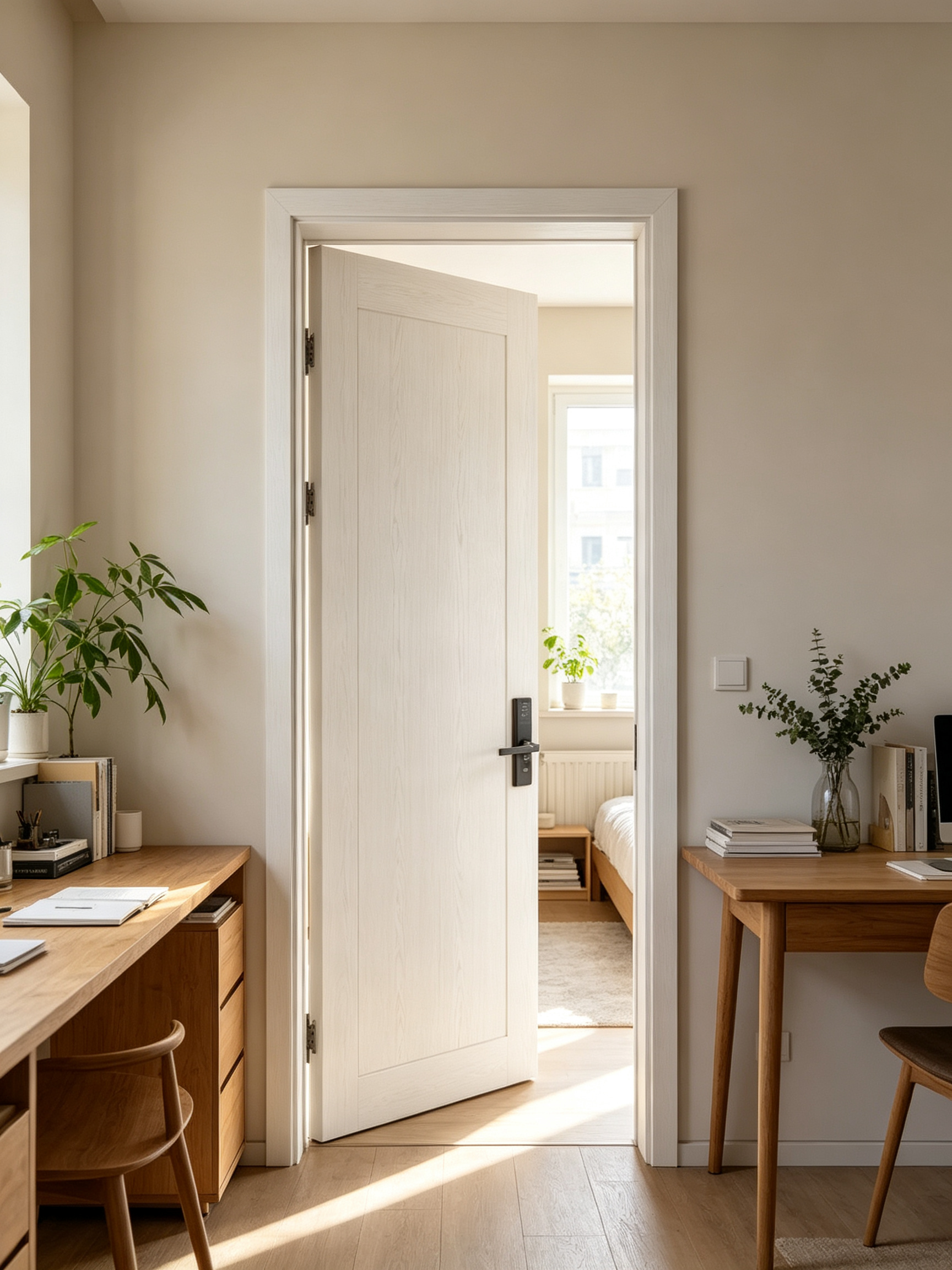
For solid wood doors or customized engineered wood doors, the internal core material dictates the reinforcement needed for hardware. Doors featuring multi-layer solid wood boards, particle board, European pine board, or density board are engineered with internal solid wood stiles and rails to secure heavy-duty commercial hinges and locksets. Surface finishes like melamine veneer, baking paint, PET veneer, or PVC film coating are carefully protected during the machining process to maintain an unblemished aesthetic.

In large-scale commercial landmark projects, custom hardware preparation often incorporates wiring prep for electronic access control. Internal raceways are bored through the core of the door, allowing power cables to run from an electric hinge or power transfer pivot directly to an electrified lockset or card reader. This maintains a clean appearance while securing the wiring from tampering.
Data/Solution Comparison
The following table outlines the differences between standard factory hardware prep, custom factory hardware prep, and field-modified hardware prep for commercial doors:
| Parameters / Features | Standard Factory Prep | Custom Factory Prep | Field Modification (On-Site) |
|---|---|---|---|
| Accuracy & Tolerance | High (Within ±0.5mm) | High (Within ±0.5mm) | Low (Highly dependent on installer skill) |
| Hardware Compatibility | Limited to standard cylindrical locks & hinges | Supports mortise locks, panic bars, electronic access, etc. | Unrestricted but risks structural damage |
| Lead Time / Delivery | 20 days | 20 to 30 days (Craftsmanship dependent) | Immediate (but increases on-site labor time) |
| Structural Safety & Warranty | Fully preserved (10-year warranty) | Fully preserved (10-year warranty) | Often voids door warranty and fire ratings |
| Suitable Scenarios | Standard offices, basic residential rooms | Villas, hotels, commercial complexes, hospitals | Emergency retrofits, minor repairs |
Frequently Asked Questions (FAQ)
Lastest
-
What are the most energy-efficient window specifications for a high-rise commercial building project?
2026-07-12 -
What is the best way to verify if a handrail supplier is a real factory or just a trading company?
2026-07-12 -
Is a 30% deposit and 70% against the bill of lading standard for ordering a custom sunroom?
2026-07-12 -
Can I get a small mockup sample of a glass curtain wall before placing a bulk order?
2026-07-12 -
Are manufacturers willing to customize the size and smart lock cutouts for a commercial door?
2026-07-12
SUBSCRIBE
INQUIRY