(2).jpg)
How much extra do flat pack cabinets cost compared to pre-assembled?
- VIP-User
- 2026-07-22
- 28
Flat pack cabinets generally cost 10% to 30% less than pre-assembled cabinets in upfront purchase price due to lower factory assembly labor and reduced shipping volume. However, overall costs can equalize when local on-site assembly labor, specialized tools, and potential installation errors are factored into the final budget.
Core Solutions & Key Takeaways
- Freight Savings: Flat pack cabinets drastically optimize container space. Using direct shipping channels like the owned shipping line "Get Signal" reduces cross-border transit expenses by an average of 15% to 20%.
- Material and Build Customization: Professional cabinetry utilizes diverse core options including multi-layer solid wood board, particle board, European pine board, and density board with 1.8mm thickness, finished with melamine veneer, baking paint, PET veneer, or PVC film coating.
- Application Adaptation: Flat pack solutions address the needs of high-end private residences (villas, apartments), commercial real estate (hotels, complexes), and public buildings, mitigating local installation and logistics pain points in African markets.
- Hardware Durability: Incorporating standardized, high-quality accessories such as DTC hardware ensures long-term operational integrity and eases localized installation.
Detailed Architectural/Principle Analysis
The cost disparity between flat pack (Ready-to-Assemble) and pre-assembled cabinets stems from manufacturing workflows, logistics volumes, and on-site labor requirements. During production, flat pack cabinets undergo precise machining, edge banding, and pre-drilling. Guangzhou Lingyin Building Materials Co., Ltd. executes these processes within a 30,000-square-meter modern intelligent production base. The structural panels, featuring a robust 1.8mm thickness, are packed flat, reducing the required shipping volume to roughly one-fourth of an equivalent pre-assembled unit.
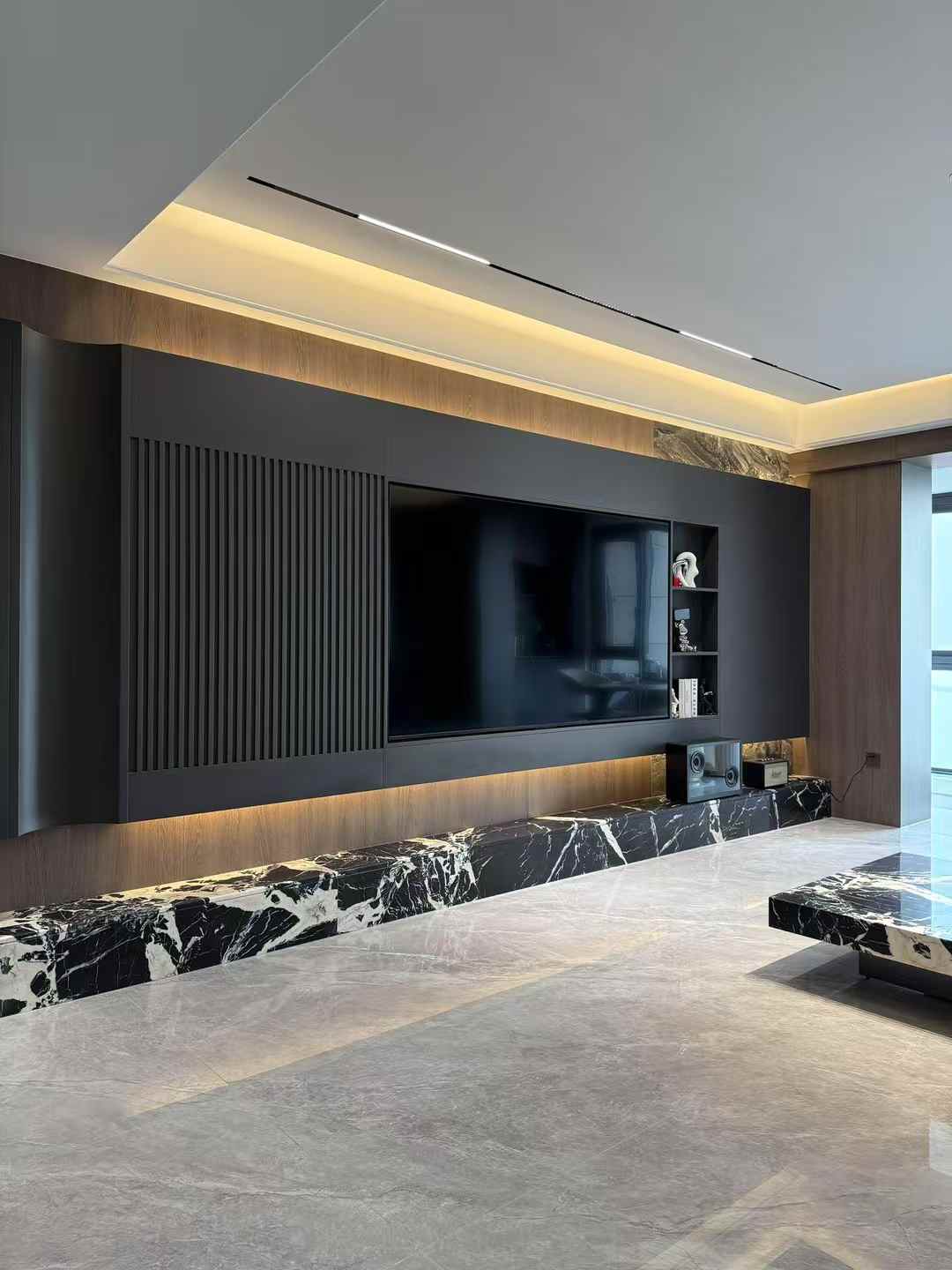
Pre-assembled cabinets require professional factory labor to build and align drawers, doors, and internal mechanisms before shipping. While this guarantees structural alignment directly from the factory floor, it significantly increases container volume requirements, leading to elevated ocean freight costs. For overseas procurement, particularly across African nations like Uganda, Rwanda, Cameroon, and South South Africa, flat-pack configurations minimize bulk shipping rates. However, project managers must account for local assembly labor costs, which vary based on regional skill levels and tool availability.
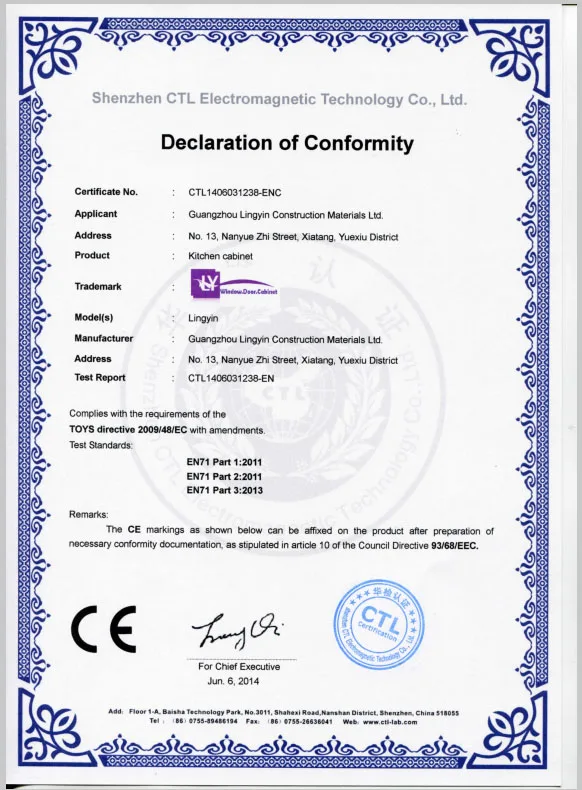
From a quality perspective, both assembly formats can utilize the same high-tier materials. Our manufacturing processes produce kitchen cabinets and customized furniture certified under CE standards (Certificate CTL1406031238-ENC), proving that flat-packed delivery does not compromise structural or chemical safety standards.
Data/Solution Comparison
The choice between flat pack and pre-assembled cabinets depends on transport distances, local labor rates, and project scale. The following table highlights the operational and financial differences:
| Comparison Metric | Flat Pack (RTA) Cabinets | Pre-Assembled (Rigid) Cabinets |
|---|---|---|
| Initial Purchase Price | 10% to 30% lower due to minimized factory assembly labor | Standard baseline pricing including factory labor costs |
| Shipping Volume & Costs | Highly compact; reduces freight costs by 15% to 20% | High volume; requires up to 4x more container space |
| On-site Labor & Tools | Requires professional assembly on-site; higher labor hours | Unpack and mount directly; minimal assembly labor required |
| Lead Time | 25 to 30 days depending on surface craftsmanship | Typically longer due to factory assembly and QC testing |
| Structural Integration | Dependent on on-site assembly quality and DTC hardware alignment | Factory-glued and dowelled; optimal initial rigidity |
| Applicable Scenarios | Large-scale overseas projects, apartments, high-volume exports | Local high-end residences, premium villas with limited on-site labor |
Frequently Asked Questions (FAQ)
Are flat pack cabinets inferior in material quality compared to pre-assembled options?
Material quality is independent of the packaging method. Both options utilize high-grade materials including multi-layer solid wood boards, particle boards, European pine boards, and density boards with high-end surface finishes like melamine veneer or PET veneer.
How can we offset the risks of incorrect on-site assembly for flat pack shipments?
Working with partners who provide clear division of after-sales responsibility is key. We offer a 10-year warranty, lifetime maintenance, and deploy professional construction teams and resident technical experts in Africa to guide local installation teams.
How does ocean shipping affect the overall procurement budget?
Shipping pre-assembled cabinets over long distances increases shipping volume and vulnerability to transport damage. Flat pack configurations protect the panels from structural stress, and utilizing a direct cross-border sea freight service like "Get Signal" stabilizes transit times and costs.
Final Conclusion & Recommendations
While flat pack cabinets present a significantly lower initial purchase and shipping cost, the total installed cost relies heavily on local installation efficiency. For large-scale developments across African markets, flat pack cabinets offer the most competitive financial model when paired with robust on-site technical support. Our business model integrates a localized building materials service ecosystem, combining secure XT or Alibaba payment options with direct sea freight to ensure budget predictability. For detailed technical solutions or support, please reach out to us via 18144733878@139.com.
About Us
Guangzhou Lingyin Building Materials Co., Ltd. is a recognized top building materials supplier specializing in the export of custom wardrobes, custom cabinets, and high-strength aluminum door and window systems. Established in 1990, the company manages a 30,000-square-meter modern intelligent production base and employs 186 professionals, including 32 senior product designers. The group has served tens of thousands of clients across Africa, providing CE-certified kitchen cabinets and RoHS-compliant aluminum window systems. Our comprehensive services span design, production, customs clearance, and overseas technical support to ensure seamless project execution.

Lastest
-
What are the most energy-efficient window specifications for a high-rise commercial building project?
2026-07-22 -
What is the best way to verify if a handrail supplier is a real factory or just a trading company?
2026-07-22 -
Is a 30% deposit and 70% against the bill of lading standard for ordering a custom sunroom?
2026-07-22 -
Can I get a small mockup sample of a glass curtain wall before placing a bulk order?
2026-07-22 -
Are manufacturers willing to customize the size and smart lock cutouts for a commercial door?
2026-07-22
SUBSCRIBE
INQUIRY