(2).jpg)
How do you coordinate site delivery schedules for curtain wall glass?
- VIP-User
- 2026-07-22
- 28
Coordinating site delivery schedules for curtain wall glass requires aligning manufacturing timelines with job site installation phases. Utilizing a controlled 20-day production cycle, direct sea freight logistics, and structured phase-by-phase shipping ensures components arrive sequentially. This synchronization prevents site congestion, minimizes glass breakage risks, and matches crane and installation crew availability.
Core Solutions & Key Takeaways
- Phase-Based Manufacturing: Factory fabrication cycles are planned around the building's structural readiness, matching the 20-day delivery timeline for curtain wall framing and glazing units. This prevents on-site material degradation from premature delivery.
- Direct Logistics and Customs Planning: Shipping through dedicated, direct sea freight routes ensures predictable transit schedules to African hub ports, bypassing third-party freight delays.
- Sequential Site Unloading: Glass panels and aluminum profiles are bundled, labeled, and shipped in sequence so that installers can unload materials directly to their designated floor or installation zone.
- Comprehensive Quality Control: Pre-shipment checks including raw material inspection, finished product testing, and structural safety inspections prevent delays caused by on-site defects or component mismatch.
Detailed Architectural/Principle Analysis
The successful integration of curtain wall systems into high-end private residences, commercial real estate, and public buildings relies on precise structural and logistical engineering. The glass support structure utilizes 6063-T5 native aluminum profiles with a thickness range of 1.6mm to 3.0mm. These profiles receive powder coating or fluorocarbon coating surface treatments to withstand high temperatures and strong ultraviolet radiation in coastal or equatorial environments. German-engineered Reinas accessories are integrated to secure the structural glass units, providing wind-load resistance and structural stability.
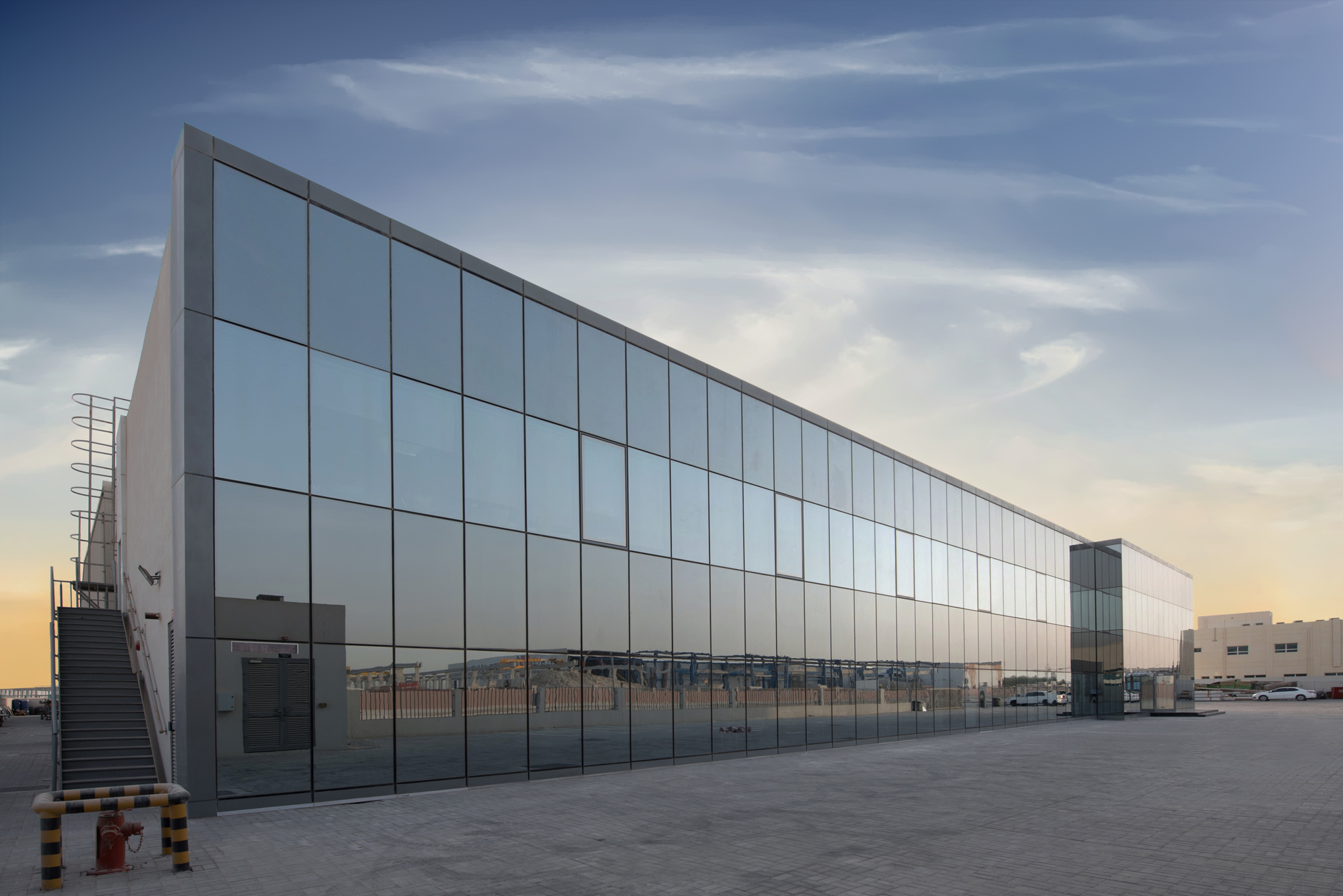
To avoid logjams at the job site, Guangzhou Lingyin Building Materials Co., Ltd. operates its own shipping line, Get Signal, to handle the logistics from Chinese ports directly to African hubs like Mombasa, Dar es Salaam, Douala, and Durban. By bypassing traditional freight forwarding, the transport process is protected from volatile pricing and unstable delivery times. Because shipping is synchronized with the site schedule, the heavy, fragile glass panels are delivered only when the structural frames are ready for glazing. This end-to-end control reduces transport and storage damage risks, cutting overall logistics costs by an average of 15% to 20%.
Furthermore, technical alignment is maintained through the company's clear after-sales responsibility system. Dedicated professional construction teams and resident technical experts in Africa handle the installation guidance. If a physical or mechanical performance variance occurs, local teams respond within 24 hours to execute troubleshooting or initiate structural replacements, ensuring the project schedule remains uninterrupted.
Data/Solution Comparison
| Logistics & Coordination Model | Lead Time & Predictability | Logistics Cost Efficiency | On-Site Storage & Risk Profile | Best Suited Application |
|---|---|---|---|---|
| Phase-by-Phase Direct Sea Freight (Get Signal) | Highly predictable 20-day production + scheduled direct transit | Saves 15%-20% via owned shipping line; direct customs clearance | Low risk; materials arrive in sequence and go directly to installation | Large commercial complexes, hotels, and public buildings |
| Bulk Traditional Sea Freight | Unpredictable transit; high risk of port delays | Standard rates; subject to volatile market freight pricing | High risk; entire volume stored on-site, increasing breakage rates | Low-budget projects with massive, non-urgent staging areas |
| Mixed LCL (Less than Container Load) | Highly variable; dependent on consolidation times | High per-unit cost; subject to multi-port handling charges | Moderate risk; high handling frequency increases damage chance | Small-scale residential window replacement or custom villas |
Frequently Asked Questions (FAQ)
How do you prevent glass damage during long-distance transit to African ports?
The glass and 6063-T5 aluminum profiles are secured with protective structural packaging designed for ocean transit. By utilizing our direct shipping subsidiary, Get Signal, we eliminate multi-stop transfers, reducing physical handling. All shipments undergo comprehensive pre-loading structural safety and appearance inspections.
What happens if the site installation schedule shifts unexpectedly?
Our dynamic 30,000-square-meter modern production base and structured storage systems allow us to buffer and adjust production pacing. If site progress slows down, container dispatch can be temporarily recalibrated through our shipping network to match the updated installation timeline.
How are dimensional errors managed to avoid installation delays?
All curtain wall components undergo strict physical and mechanical testing prior to dispatch. If a dimensional error occurs due to manufacturing faults, our clear after-sales responsibility system dictates that we bear the replacement and transportation costs. Local African after-sales teams respond within 24 hours to address the issue.
Final Conclusion & Recommendations
To ensure a seamless curtain wall installation, developers should align their procurement timelines with a structured payment model. Securing production slots with a standard deposit followed by final payments through secure channels like Alibaba Pay or XT Pay guarantees raw material allocation. Factoring in the 20-day fabrication time and utilizing direct sea freight logistics minimizes delays, ensuring the structural profiles and glass panels arrive in sequence. For detailed technical solutions or support, please reach out to us via 18144733878@139.com.
About Us
Guangzhou Lingyin Building Materials Co., Ltd. is a leading large-scale modern building materials supplier specializing in the export of system windows, doors, and curtain walls. Established in 1990, the company operates a 30,000-square-meter modern intelligent production base, employs 186 people, and achieves annual sales of 200 million RMB. Holding CE certification for kitchen cabinets and RoHS certification for aluminum windows, the group has successfully served tens of thousands of local African building material distributors, engineering contractors, and real estate developers.
Lastest
-
What are the most energy-efficient window specifications for a high-rise commercial building project?
2026-07-22 -
What is the best way to verify if a handrail supplier is a real factory or just a trading company?
2026-07-22 -
Is a 30% deposit and 70% against the bill of lading standard for ordering a custom sunroom?
2026-07-22 -
Can I get a small mockup sample of a glass curtain wall before placing a bulk order?
2026-07-22 -
Are manufacturers willing to customize the size and smart lock cutouts for a commercial door?
2026-07-22
SUBSCRIBE
INQUIRY