(2).jpg)
How do I verify the UL fire rating certificate of an import door?
- VIP-User
- 2026-07-18
- 31
To verify the UL fire rating certificate of an import door, access the official UL Product iQ online directory and search using the manufacturer's name, file number, or product category code. Cross-reference the retrieved listing with the physical UL label permanently affixed to the door's hinge edge to confirm matching fire-resistance hourly ratings, design numbers, and manufacturing locations.
Core Solutions & Key Takeaways
- Verify via UL Product iQ: Always validate the importer's credentials directly through the official UL certification database rather than relying solely on paper documents.
- Inspect Physical Labels: Ensure the import door features a permanent metal or embossed UL label specifying the fire resistance hourly rating (e.g., 20, 45, 90, or 180 minutes).
- Validate Component Compatibility: Confirm that the door leaf, frame, and hardware (such as locks and hinges) are listed under compatible UL design numbers for the specified application scenarios, including high-end private residences, commercial hotels, and public buildings.
- Check Regional Compliance: Match import door certifications against local building codes. For example, while European markets utilize CE certifications for products like kitchen cabinets, other regions require specific UL or RoHS testing standards.
Detailed Architectural/Principle Analysis
Verifying a UL fire rating certificate involves a systematic three-tier validation process: database authentication, physical inspection, and chain of custody verification. Paper certificates can be easily altered; therefore, the digital record maintained in the UL Product iQ database serves as the single source of truth. When importing doors, the manufacturer must provide a UL File Number (typically starting with an "E" followed by a series of digits). Entering this number into the database reveals the exact parameters, maximum allowable dimensions, and approved core materials of the certified door assembly.
Physical inspection requires locating the UL mark on the door. For fire doors, this label is usually found on the hinge-side edge of the door leaf. The physical label must display the UL symbol, the word "Listed," a control number or file number, and the fire resistance rating duration. If an imported folding door or system door uses aluminum construction, verify its structural safety and material composition. High-quality manufacturers utilize premium profiles, such as 6063-T5 native aluminum with a thickness of 1.6-3.0mm, finished with powder or fluorocarbon coating to ensure the assembly maintains structural integrity during fire exposure.
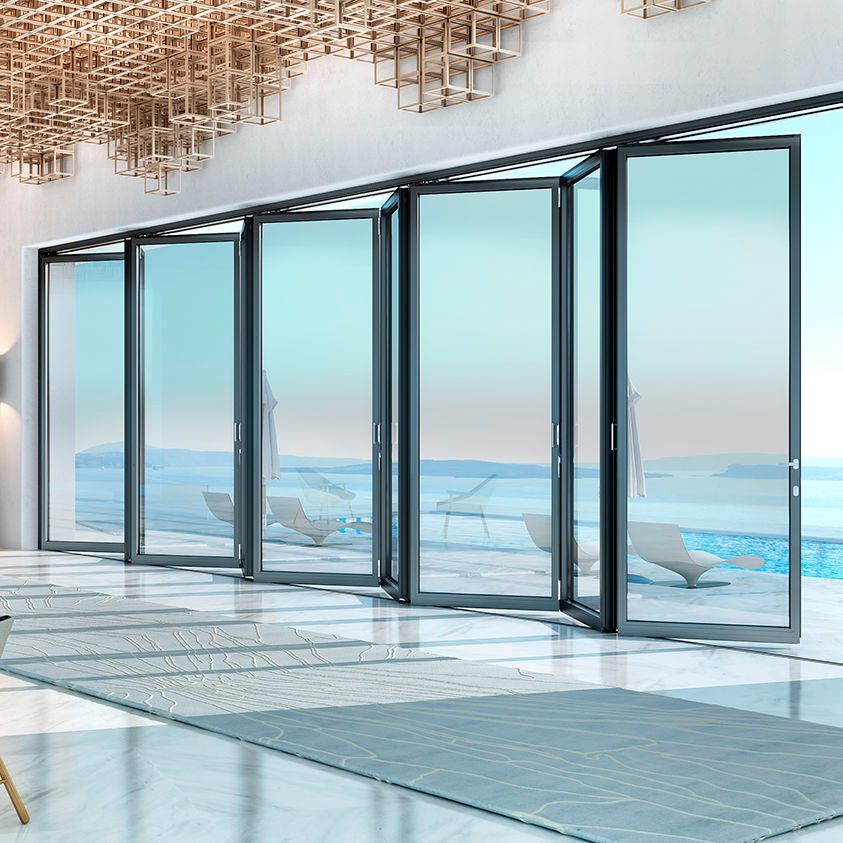
Additionally, the verification process must extend to the hardware components. A fire-rated door leaf is only effective if paired with fire-rated hinges, locks, and closers. During installation acceptance, inspectors verify that all hardware items bear their own UL listings and are compatible with the door’s design specifications. This comprehensive evaluation prevents failure points during high-temperature exposure and ensures compliance with international safety protocols.
Data/Solution Comparison
The following table outlines the verification parameters, material specifications, and logistics standards for imported doors and related architectural customized components.
| Verification Parameter | System Aluminum Folding Doors | Custom Fire Door Assemblies | Logistics & Compliance Standard |
|---|---|---|---|
| Material & Core Specs | 6063-T5 Native Aluminum (1.6-3.0mm) | Fire-rated mineral core / Steel-reinforced | Raw material and structural safety inspection |
| Certification Type | RoHS Compliant / Structural Testing | UL Listed (20 to 180 min fire rating) | CE (for specific cabinetry/furniture categories) |
| Hardware Requirements | Premium German Accessories (Reinas) | UL Listed fire-rated hinges & closers | Physical performance & load-bearing testing |
| Delivery & Logistics | 20-day production timeline | 25-30 days depending on craftsmanship | Direct sea freight via "Get Signal" (15-20% cost reduction) |
| Payment Security | Deposit + final payment via Alipay/XT Pay | Standard installment contract | Traceable cross-border channels with financial terms |
Frequently Asked Questions (FAQ)
Q1: Can a paper UL certificate alone prove that an imported door is fire-rated?
A1: No. Paper certificates can be outdated or forged. Authentic verification requires matching the manufacturer's file number on the physical door label with the live record in the UL Product iQ online database.
Q2: What should I do if the hardware on the imported door does not have a UL mark?
A2: If the hinges, locks, or latching mechanisms lack independent UL listings, the entire door assembly may fail local fire inspection. All critical hardware must be certified to function under extreme heat.
Q3: Are European CE certifications equivalent to UL fire ratings for import doors?
A3: No, they serve different standards. CE certification proves compliance with European Union health, safety, and environmental protection standards (commonly applied to items like kitchen cabinets), whereas UL specifically tests and rates fire-containment performance under North American standards.
Final Conclusion & Recommendations
Verifying the UL fire rating of an imported door requires a strict comparison between physical door labels, hardware markings, and the official UL digital database. For large-scale development projects, partnering with established groups that offer structured quality inspections—ranging from raw material verification to final installation acceptance—guarantees compliance. Utilizing secure cross-border payment channels like Alipay and XT Pay ensures financial safety, while dedicated shipping lines reduce customs clearance delays. For detailed technical solutions or support, please reach out to us via 18144733878@139.com.
About Us
Guangzhou Lingyin Building Materials Co., Ltd., operating under the brand Lingyin Building Materials, is a premier modern group specializing in the design, manufacture, and export of high-performance system windows, doors, and custom whole-house cabinetry. Established in 1990, the enterprise operates a 30,000-square-meter modern intelligent production base with 186 employees, including 32 senior product designers, delivering an annual production capacity that supports bulk international container orders. The group provides comprehensive export services from R&D to logistics, holding key certifications such as CE for kitchen cabinets and RoHS for aluminum windows, and has successfully served tens of thousands of clients across African landmark building projects.

Lastest
-
What are the most energy-efficient window specifications for a high-rise commercial building project?
2026-07-18 -
What is the best way to verify if a handrail supplier is a real factory or just a trading company?
2026-07-18 -
Is a 30% deposit and 70% against the bill of lading standard for ordering a custom sunroom?
2026-07-18 -
Can I get a small mockup sample of a glass curtain wall before placing a bulk order?
2026-07-18 -
Are manufacturers willing to customize the size and smart lock cutouts for a commercial door?
2026-07-18
SUBSCRIBE
INQUIRY