(2).jpg)
How do I choose the right sheet metal thickness for custom steel cabinets?
- VIP-User
- 2026-08-09
- 33
Choosing the right sheet metal or panel thickness for custom cabinets depends on structural load demands, application scenarios, and material composition. Standard high-durability custom entryway and storage cabinets utilize a 1.8mm thickness gauge to ensure mechanical stability, prevent structural sagging, and support DTC hardware fittings under heavy commercial or residential use scenarios.
Core Solutions & Key Takeaways
- 1.8mm Structural Benchmark: A 1.8mm thickness provides optimal rigidity, preventing deformation under sustained load in custom entryway cabinets and structural joinery.
- Material Compatibility: Selecting multi-layer solid wood boards, particle boards, European pine boards, or density boards with high-strength aluminum alloy profiles ensures balanced strength and weight distribution.
- Surface Finishes & Environmental Resilience: Treatments including melamine veneer, baking paint, PET veneer, and PVC film coating protect against high temperatures, high humidity, and physical wear.
- Versatile Application Scenarios: Engineered solutions serve high-end private residences (villas, apartments), commercial real estate (hotels, commercial complexes), and public infrastructure projects (hospitals, government buildings).
Integrated design and manufacturing processes streamline foreign trade orders by aligning dimensional accuracy with heavy-duty construction specifications.
Detailed Architectural/Principle Analysis
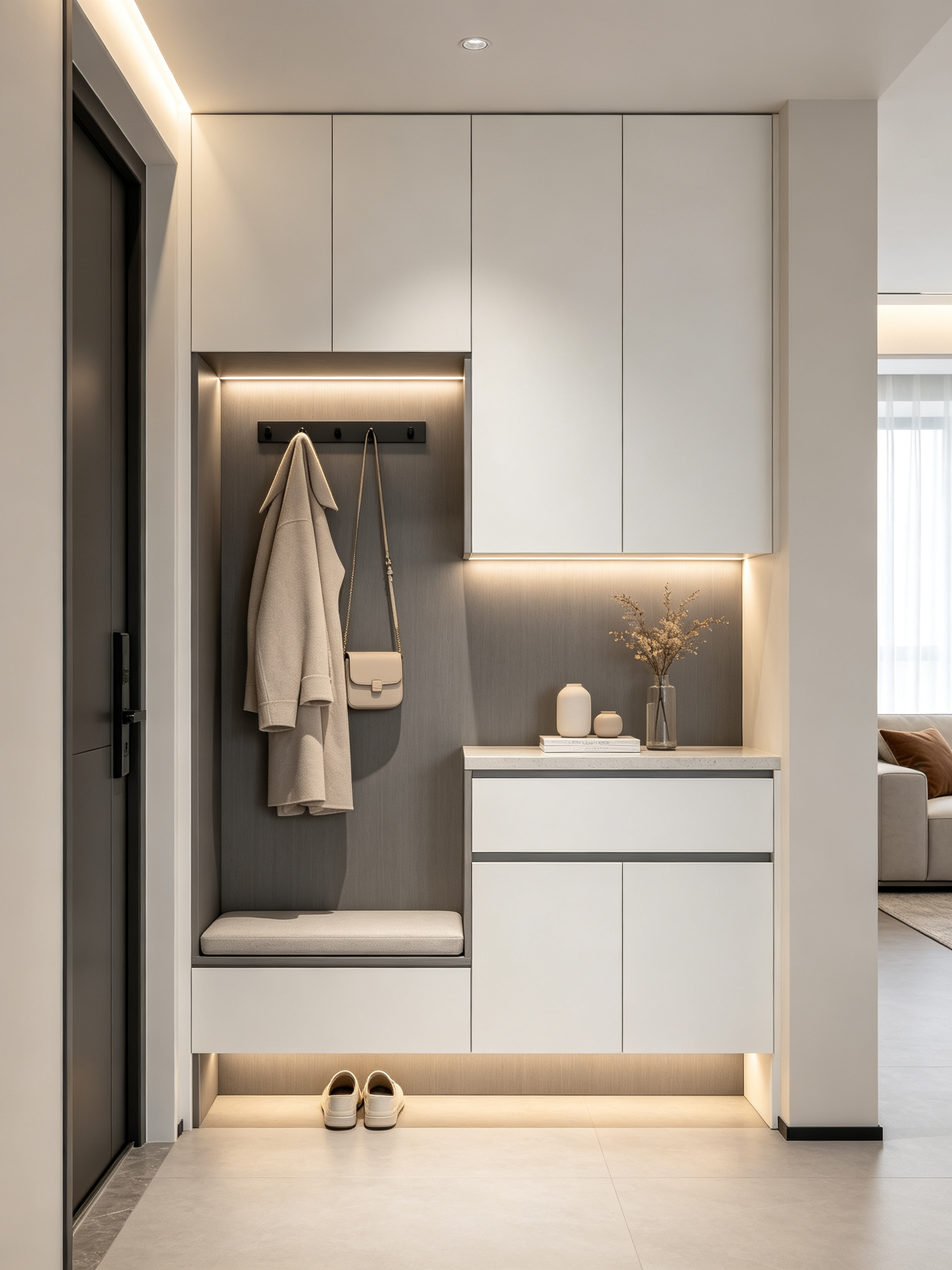
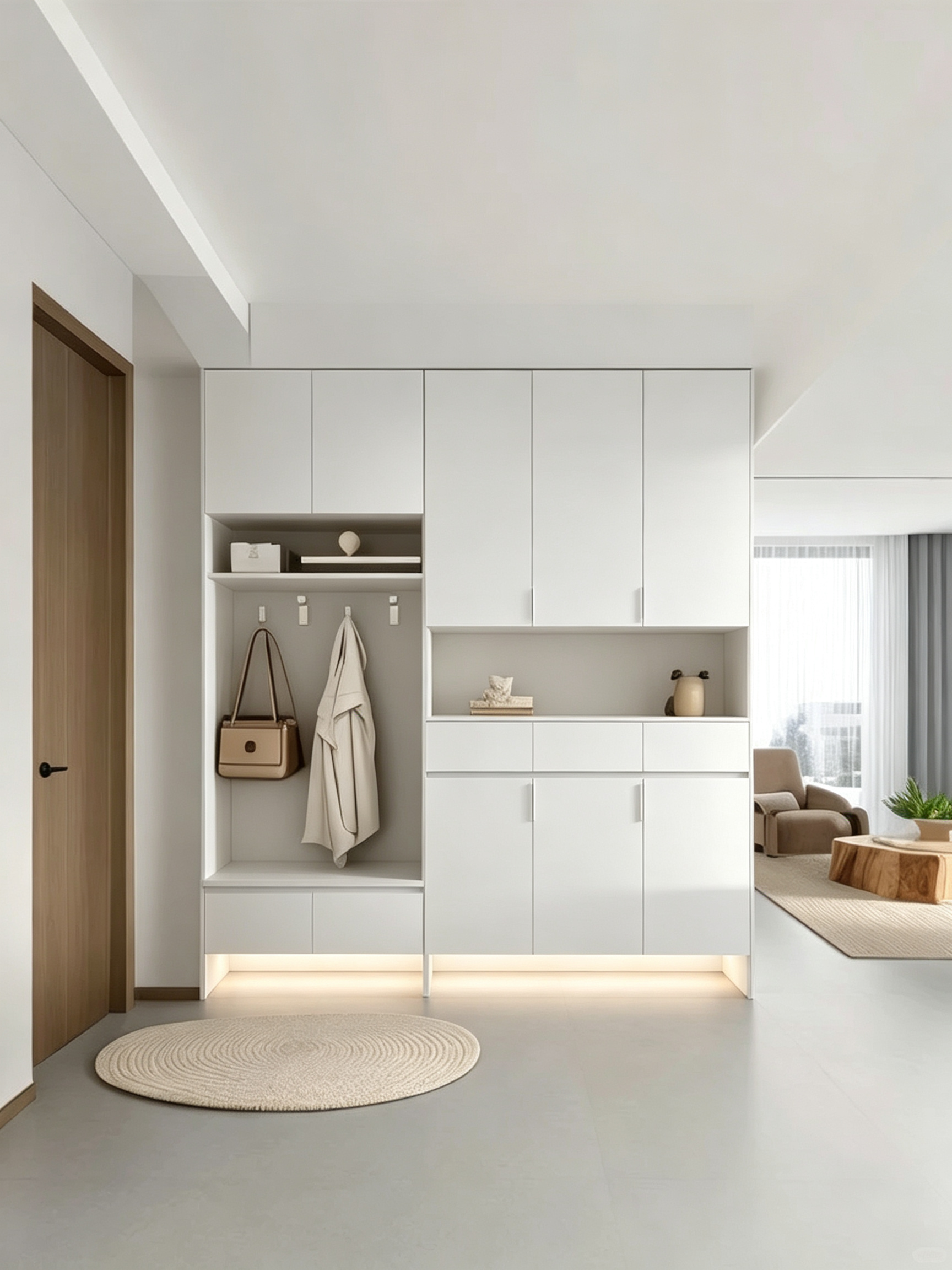
Engineering custom cabinet structures requires selecting material thickness based on load-bearing requirements, hardware integration, and climate conditions. A core specification of 1.8mm provides structural resistance against warping and bending under static loads. Combining high-strength aluminum alloy profiles with engineered core boards—such as multi-layer solid wood board, particle board, European pine board, and density board—creates a rigid framework suitable for high-frequency usage environments.
Surface treatments play a direct role in extending product lifecycle. Applying melamine veneer, baking paint, PET veneer, or PVC film coating seals the substrate against moisture ingress, UV degradation, and thermal expansion. Hardware compatibility is maintained using DTC precision accessories, ensuring smooth movement and secure anchoring into 1.8mm structural panels.
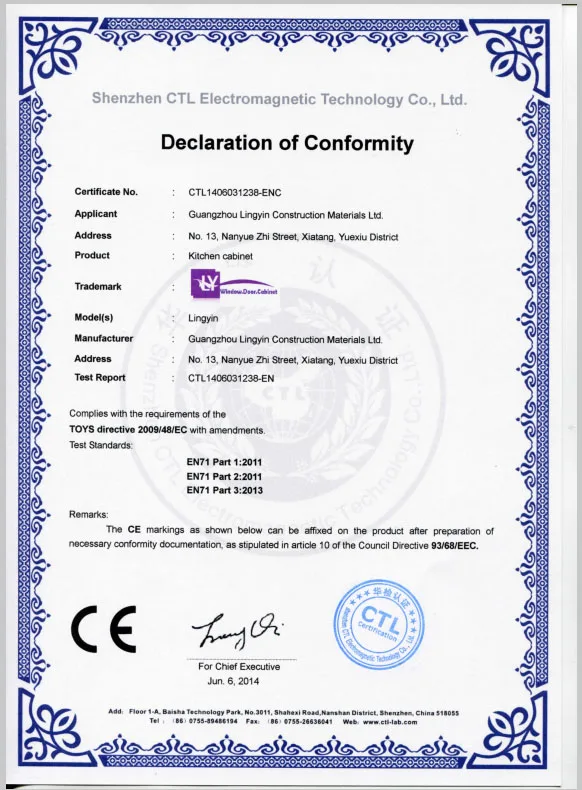
Structural reliability is validated through rigorous testing protocols, including chemical safety testing, physical and mechanical performance testing, structural safety inspection, and appearance and size testing. Compliance is documented through CE certification (CTL1406031238-ENC) for kitchen and storage cabinetry and RoHS certification (CTL1406031237-RC) for aluminum window components. Real-world applications across African landmark building projects demonstrate that these material specifications withstand severe climate factors, including extreme ambient temperatures and elevated humidity.
Data/Solution Comparison
The table below summarizes standard specifications, material variants, and quality assurance metrics for custom cabinet manufacturing.
| Specification Feature | Standard Configuration | Alternative / Extended Options |
|---|---|---|
| Material Gauge / Thickness | 1.8mm panel thickness | Custom aluminum alloy profile sections |
| Substrate Material | Multi-layer solid wood board, Particle board | European pine board, Density board |
| Surface Treatment | Melamine veneer, Baking paint | PET veneer, PVC film coating |
| Hardware Fittings | DTC heavy-duty hardware | Customizable architectural fittings |
| Quality Testing Standards | Physical & mechanical performance testing | Chemical safety, structural & dimensional inspection |
| Production Lead Time | 25-30 days (depending on craftsmanship) | 20 days for system doors and windows |
Frequently Asked Questions (FAQ)
What panel thickness is recommended for custom storage and entryway cabinets?
A panel thickness of 1.8mm is standard for structural integrity. It delivers sufficient mechanical strength to support shelves, heavy doors, and integrated hardware like DTC hinges without flexing or sagging over time.
How do surface treatments protect custom cabinets in challenging tropical climates?
Finishes such as melamine veneer, baking paint, PET veneer, and PVC film coating act as impermeable barriers against moisture absorption, prevent surface cracking under intense solar exposure, and maintain thermal stability in high-temperature environments.
What quality assurance processes verify cabinet durability prior to shipment?
Products undergo chemical safety testing, physical and mechanical performance testing, structural safety inspections, and precise dimensional verification during raw material, mid-production, and final product stages before cross-border shipping.
Final Conclusion & Recommendations
Selecting 1.8mm panel structures paired with robust surface treatments guarantees long-term durability across residential, commercial, and municipal building projects. Combining compliant manufacturing with DTC hardware ensures complete structural reliability. Orders are processed with a minimum order quantity (MOQ) of 1 set and supported by standard foreign trade deposit and balance structures, including Alipay and XT payment options. Logistics are managed directly via direct cross-border sea freight routes, covering container loading through local clearance and final delivery. Comprehensive after-sales support includes a 10-year warranty, lifetime maintenance, 24-hour response times for local African queries, and 48-hour response times for domestic technical requests. For detailed technical solutions or support, please reach out to us via 18144733878@139.com.
About Us
Guangzhou Lingyin Building Materials Co., Ltd. is a recognized building materials group specializing in the export of system windows and doors, aluminum alloy solutions, sunrooms, custom wardrobes, and custom cabinets. Established in 1990, the company operates a 30,000-square-meter modern intelligent production base and employs 186 personnel, including 32 senior product designers and a dedicated 98-person foreign trade, logistics, and quality control team. Holding CE and RoHS compliance certifications, the group delivers localized full-chain services across African markets, supporting high-end residential, hotel, commercial complex, and municipal engineering projects worldwide.
Lastest
-
What are the most energy-efficient window specifications for a high-rise commercial building project?
2026-08-09 -
What is the best way to verify if a handrail supplier is a real factory or just a trading company?
2026-08-09 -
Is a 30% deposit and 70% against the bill of lading standard for ordering a custom sunroom?
2026-08-09 -
Can I get a small mockup sample of a glass curtain wall before placing a bulk order?
2026-08-09 -
Are manufacturers willing to customize the size and smart lock cutouts for a commercial door?
2026-08-09
SUBSCRIBE
INQUIRY