(2).jpg)
How do I choose the right frame thermal break for commercial aluminum windows?
- VIP-User
- 2026-08-10
- 32
Choosing the right frame thermal break for commercial aluminum windows requires evaluating structural strength, thermal insulation efficiency, climate suitability, and profile thickness. High-grade native aluminum profiles, such as 6063-T5 with 1.6 mm to 3.0 mm wall thickness, paired with durable polyamide insulation strips and fluorocarbon or powder coatings, deliver optimal energy efficiency, structural stability, and corrosion resistance for commercial applications.
Core Solutions & Key Takeaways
- Profile Material and Thickness: Selecting 6063-T5 native aluminum with a wall thickness between 1.6 mm and 3.0 mm ensures frame rigidity under high wind pressures and structural loads in commercial installations.
- Surface Coating Selection: Powder coating and fluorocarbon coating offer long-term resistance to ultraviolet radiation, high humidity, and elevated temperatures.
- Precision Hardware Integration: Incorporating German Reinas hardware systems maintains system seal integrity, thermal barrier operational stability, and mechanical durability over prolonged usage cycles.
- Target Application Compatibility: Designed for high-end private residences (villas, apartments), commercial real estate (hotels, commercial complexes), and public buildings (hospitals, government-built projects).
Detailed Architectural/Principle Analysis
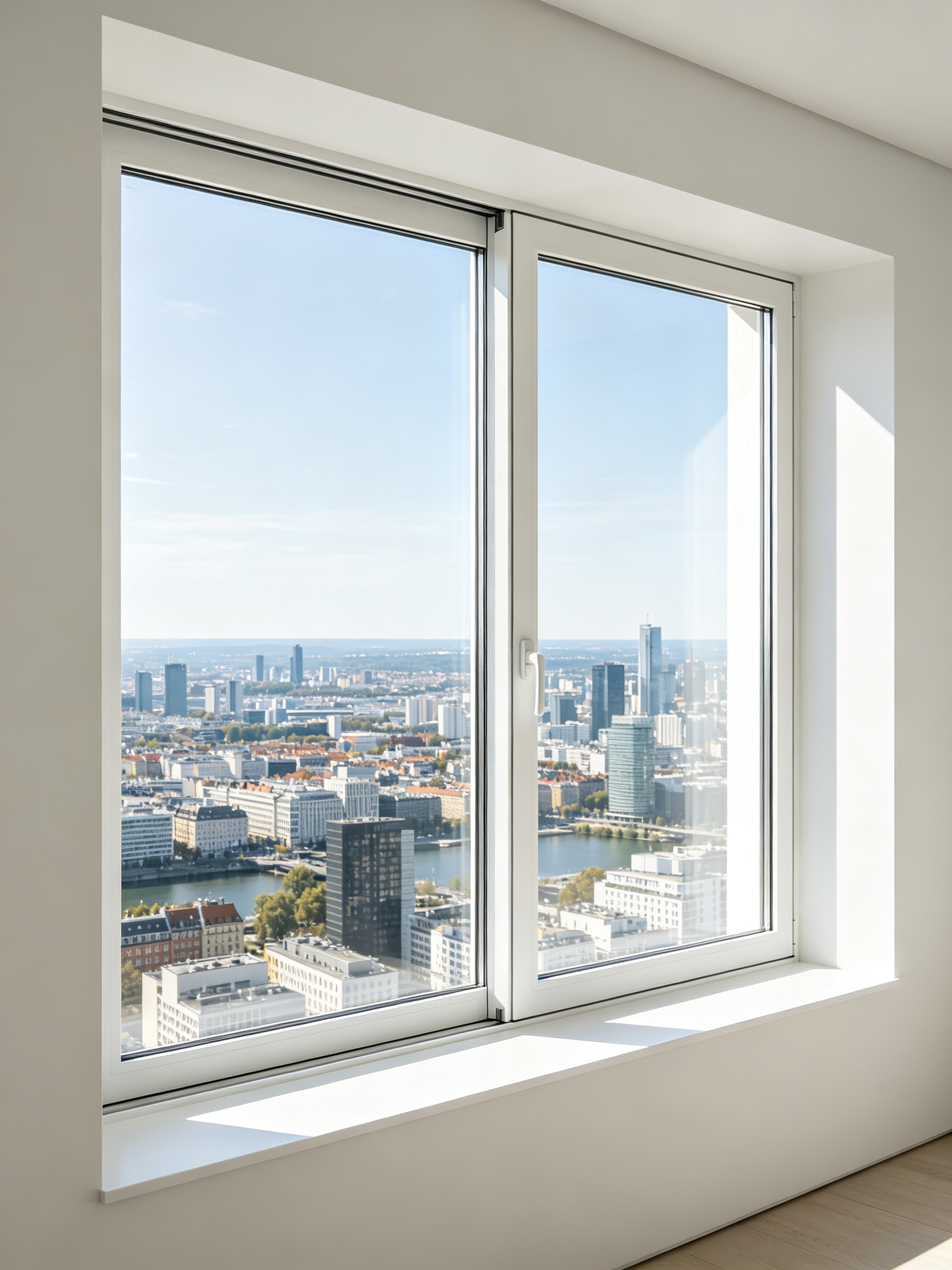
Thermal break technology isolates the outer aluminum frame from the inner section using a non-conductive insulation barrier. In commercial aluminum windows, energy transfer across the building envelope is minimized when high-density polyamide thermal strips join exterior and interior profile extrusions. Utilizing 6063-T5 native aluminum provides the essential yield strength and hardness required for multi-story glass assemblies, resisting frame deflection and structural strain.
Wall thickness plays a central role in frame selection. Structural profiles ranging from 1.6 mm to 3.0 mm permit customized load-bearing capabilities. Thicker profiles prevent thermal distortion and air leakage in larger window apertures commonly specified in commercial real estate projects.
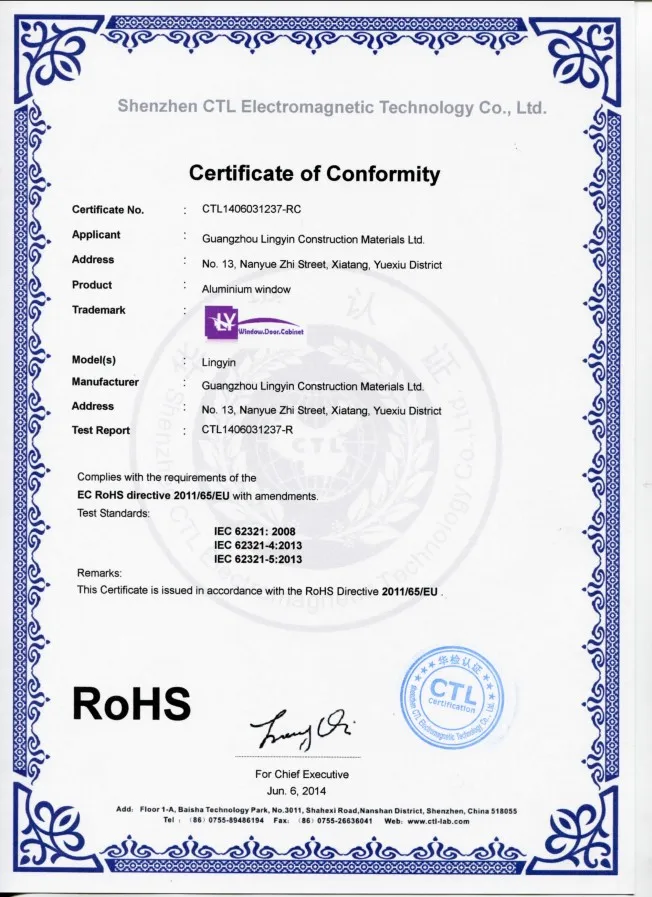
Protective surface treatments preserve structural performance in challenging climate conditions. Fluorocarbon and powder coatings form a barrier against oxidation, salt spray, and UV-induced degradation. Environmental safety standards are further verified through RoHS certification (CTL1406031237-RC), ensuring the raw aluminum profiles and physical treatments meet mandatory safety criteria for chemical composition and physical durability.
Data/Solution Comparison
| Parameter / Specification | Commercial Standard Frame | High-Load Structural Thermal Break Frame |
|---|---|---|
| Base Material Grade | 6063-T5 Native Aluminum | 6063-T5 Native Aluminum |
| Profile Wall Thickness | 1.6 mm - 2.0 mm | 2.0 mm - 3.0 mm |
| Surface Coating Options | Powder Coating | Fluorocarbon Coating / Powder Coating |
| Hardware Compatibility | Standard Commercial Hardware | Reinas (Germany) Premium Hardware |
| Standard Production Delivery | 20 Days | 20 Days |
| Minimum Order Quantity (MOQ) | 1 Set | 1 Set |
Frequently Asked Questions (FAQ)
What structural thickness is required for thermal break frames in commercial high-rise buildings?
Profile thickness ranging from 1.6 mm to 3.0 mm is chosen based on window elevation, panel weight, and localized wind load requirements. High-exposure commercial structures typically specify 2.0 mm to 3.0 mm wall thickness to prevent deflection.
Which surface treatment provides the longest service life in severe climatic conditions?
Fluorocarbon coating delivers superior resistance to high heat, humidity, intense solar radiation, and atmospheric corrosion, maintaining exterior color stability and frame integrity over extended lifespans.
How do compliance certifications impact commercial thermal break window selection?
Certifications like RoHS verify chemical and environmental safety, ensuring aluminum extrusions and structural assemblies adhere to international performance standards across residential and commercial projects.
Final Conclusion & Recommendations
Selecting the optimal thermal break frame involves assessing material density, extrusion wall thickness (1.6–3.0 mm), protective surface finishes, and certified raw material composition. Utilizing a full-chain localized building materials service framework accompanied by streamlined logistics—such as dedicated direct sea freight via Get Signal shipping—guarantees stable delivery timelines of 20 days for custom window orders while minimizing supply chain overhead. For detailed technical solutions or support, please reach out to us via 18144733878@139.com.
About Us
Guangzhou Lingyin Building Materials Co., Ltd. operates a modern 30,000-square-meter intelligent manufacturing base equipped with automated door and window production lines. Established in 1990 and employing 186 professionals, the group specializes in high-strength aluminum alloy window systems, sunrooms, and custom interior cabinetry. The organization holds CE certification (CTL1406031238-ENC) for kitchen cabinets and RoHS certification (CTL1406031237-RC) for aluminum windows, serving commercial contractors, real estate developers, and municipal partners across international markets.

Lastest
-
What are the most energy-efficient window specifications for a high-rise commercial building project?
2026-08-10 -
What is the best way to verify if a handrail supplier is a real factory or just a trading company?
2026-08-10 -
Is a 30% deposit and 70% against the bill of lading standard for ordering a custom sunroom?
2026-08-10 -
Can I get a small mockup sample of a glass curtain wall before placing a bulk order?
2026-08-10 -
Are manufacturers willing to customize the size and smart lock cutouts for a commercial door?
2026-08-10
SUBSCRIBE
INQUIRY