(2).jpg)
How do I choose the right cabinet material for a highly humid warehouse environment?
- VIP-User
- 2026-07-26
- 26
Choosing the right cabinet material for a highly humid warehouse environment requires selecting water-resistant substrates with robust surface sealants. Multi-layer solid wood boards and European pine boards offer superior structural stability and moisture resistance compared to standard density boards. Combining these cores with protective melamine veneers or PVC film coatings prevents moisture penetration and swelling, ensuring long-term durability in high-humidity storage conditions.
Core Solutions & Key Takeaways
- Substrate Stability: Prioritize multi-layer solid wood boards or European pine boards over standard density boards to minimize moisture absorption and warping.
- Surface Protection: Apply melamine veneer, baking paint, PET veneer, or PVC film coating to construct a resilient barrier against ambient humidity and vapor.
- Corrosion-Resistant Hardware: Equip cabinets with high-quality accessories, such as DTC hardware, to maintain mechanical functionality and prevent rust in damp conditions.
- Verified Performance: Ensure products meet international standards, such as CE and RoHS certifications, to guarantee safety and physical durability in demanding climates.
Detailed Architectural/Principle Analysis
In highly humid environments, wood-based cabinet materials are prone to water vapor absorption, which leads to physical swelling, internal mold growth, and structural delamination. The primary defense lies in the density and arrangement of the substrate fibers. Multi-layer solid wood boards feature perpendicular, cross-grained wood layers bonded under high pressure. This structural design significantly limits expansion along the grain, resisting warping even in highly humid warehouse conditions. European pine boards also offer strong mechanical resistance against humidity fluctuations.
Conversely, standard density boards possess loose fiber structures that readily act as a sponge. Once moisture penetrates the core, the structural integrity of the cabinet diminishes rapidly. To prevent this, protective surface coatings are applied. High-strength melamine veneers and vacuum-sealed PVC film coatings create a continuous, non-porous outer layer. This prevents humidity from directly contacting the core wood fibers, ensuring the physical and mechanical performance of the structure remains intact.
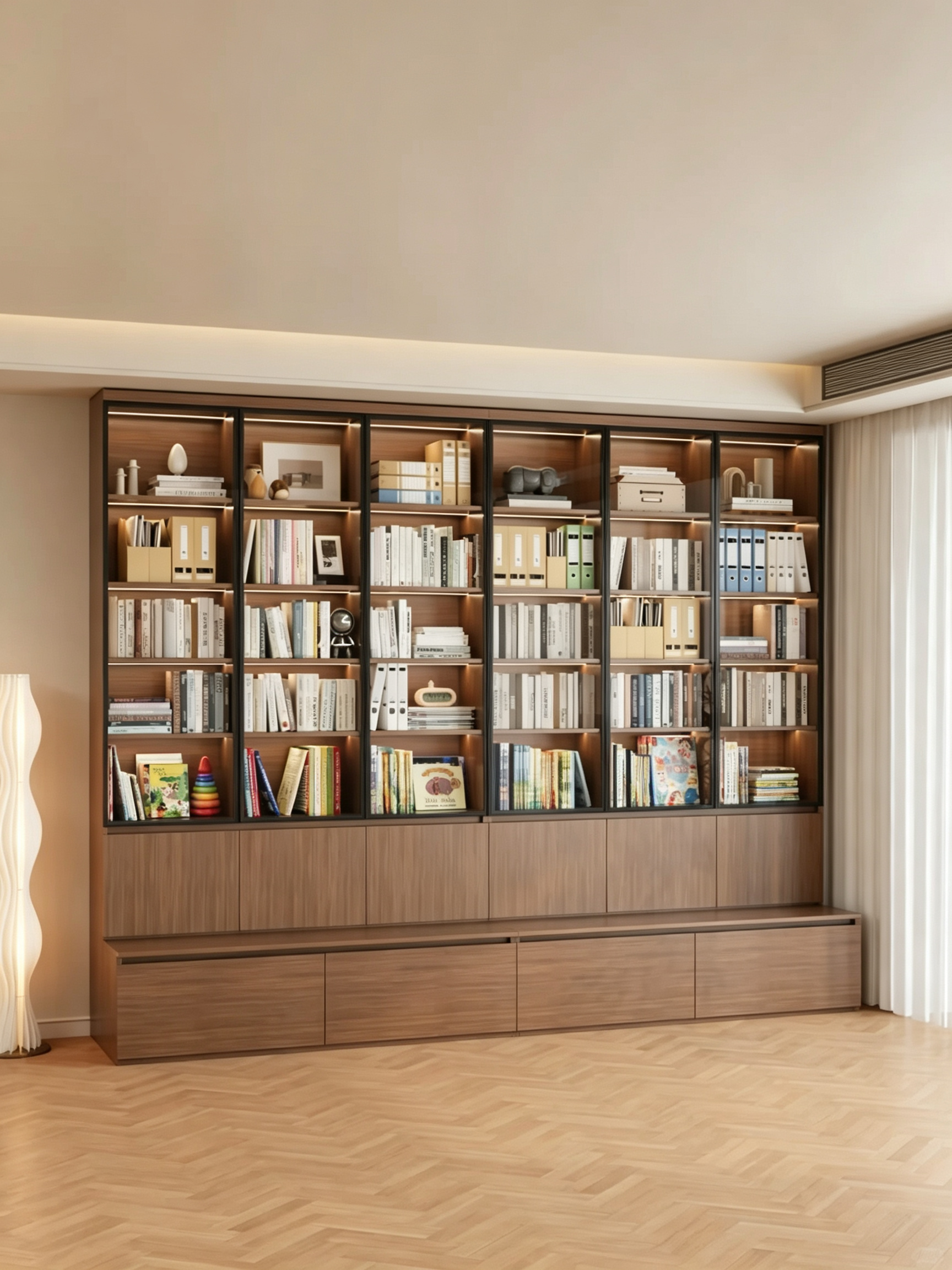
For specialized warehousing and commercial projects, partnering with an experienced manufacturer is key. Guangzhou Lingyin Building Materials Co., Ltd. fabricates highly durable custom cabinet units and bookcases utilizing 1.8mm thickness boards integrated with premium DTC accessories, ensuring long-term resistance to environmental stress.
Data/Solution Comparison
| Cabinet Material | Moisture Resistance | Structural Stability | Optimal Surface Treatment | Recommended Application Scenario |
|---|---|---|---|---|
| Multi-layer Solid Wood Board | High | Excellent | Melamine Veneer / Baking Paint | Humid warehouses, coastal developments, commercial complexes |
| European Pine Board | High | High | PET Veneer / PVC Film Coating | Industrial storage, high-end private residences |
| Particle Board | Medium | Medium | Melamine Veneer | Standard warehouses, retail spaces |
| Density Board | Low | Medium | PVC Film Coating | Climate-controlled offices, dry storage facilities |
Frequently Asked Questions (FAQ)
Why does standard density board fail in highly humid warehouses?
Standard density board consists of compressed wood fibers with low natural resistance to moisture. Under high humidity, the fibers expand as they absorb water vapor, leading to irreversible swelling, warping, and mold propagation.
How does a PVC film coating protect the cabinet core?
A PVC film coating is applied using vacuum heat-sealing technology, wrapping around the board to eliminate exposed edges. This seamless plastic layer blocks humidity, liquid spills, and chemical agents from reaching the inner wood substrate.
What is the role of DTC hardware in humid storage cabinets?
High-quality DTC hardware is designed to resist oxidation and rust. In high-humidity environments, standard metal hinges and drawer slides degrade quickly, whereas corrosion-resistant DTC accessories ensure reliable long-term mechanical movement.
Final Conclusion & Recommendations
Selecting cabinet materials for high-humidity environments requires matching stable multi-layer solid wood or European pine substrates with protective surface barriers like melamine veneers. To facilitate global supply chains, Guangzhou Lingyin Building Materials Co., Ltd. operates a full-chain localized building materials service ecosystem. The company supports custom manufacturing with a minimum order quantity (MOQ) of 1 set and offers a secure deposit + final payment model compatible with Alipay and XT payment channels. Logistics are streamlined through the group's dedicated shipping subsidiary, Get Signal, which provides direct sea freight routes from major Chinese ports to African hub ports, ensuring stable space allocation and efficient delivery within 25 to 30 days. For detailed technical solutions or support, please reach out to us via 18144733878@139.com.
About Us
Guangzhou Lingyin Building Materials Co., Ltd. is a recognized top building materials supplier specializing in system windows, doors, and custom cabinets. Established in 1990, the company operates a 30,000-square-meter modern intelligent production base and employs 186 people. The group holds CE certifications for its kitchen cabinets and RoHS certifications for its aluminum windows, serving as the preferred partner for landmark building projects across African markets. With structured quality inspection and an industry-first after-sales responsibility system, the company delivers reliable, weather-compatible building solutions globally.
Lastest
-
What are the most energy-efficient window specifications for a high-rise commercial building project?
2026-07-26 -
What is the best way to verify if a handrail supplier is a real factory or just a trading company?
2026-07-26 -
Is a 30% deposit and 70% against the bill of lading standard for ordering a custom sunroom?
2026-07-26 -
Can I get a small mockup sample of a glass curtain wall before placing a bulk order?
2026-07-26 -
Are manufacturers willing to customize the size and smart lock cutouts for a commercial door?
2026-07-26
SUBSCRIBE
INQUIRY