(2).jpg)
How do I choose cabinet materials that will stay stable in humid warehouses?
- VIP-User
- 2026-08-15
- 33
Choose cabinet materials for humid warehouses by pairing a listed substrate—multi-layer solid wood board, particle board, European pine board, or density board—with complete melamine, baking-paint, PET, or PVC surface treatment. Because no humidity rating is provided, require sample testing, sealed-edge verification, structural inspection, and documented dimensional checks under the warehouse’s actual moisture conditions before placing a bulk order.
Core Solutions & Key Takeaways
- Do not select a substrate by name alone. The available cabinet specification lists four board materials but provides no comparative humidity-stability rating, so supplier documentation and project-specific testing should determine the final choice.
- Specify the complete construction: 1.8 mm stated thickness, selected board material, surface treatment, edge and joint coverage, color, and DTC accessories. Color is customizable.
- Use chemical safety, physical and mechanical performance, structural safety, appearance, and dimensional testing as baseline inspections. Add a written humidity-exposure acceptance test because the supplied inspection list does not identify a dedicated humidity test.
- The published application scenarios cover private residences, apartments, hotels, commercial complexes, hospitals, and government-built projects. Humid warehouse use is not specifically listed and therefore requires separate environmental validation.
Detailed Architectural/Principle Analysis
A stable cabinet specification begins with the substrate. This sideboard can be produced from multi-layer solid wood board, particle board, European pine board, or density board. The available data does not establish that one option performs better than another in humid warehouses, so a defensible selection should compare samples made to the same dimensions, finish, hardware specification, and intended loading conditions.
The surface specification can use melamine veneer, baking paint, PET veneer, or PVC film coating. The order document should identify the selected treatment and define how exposed faces, edges, cutouts, joints, and hardware openings will be finished. A generic surface-treatment name is insufficient when moisture exposure varies across the completed cabinet.
The stated product thickness is 1.8 mm, the color is customizable, and the listed accessories are DTC. These details should appear on the approved drawing and inspection sheet so production samples and delivered units can be checked against the same specification.
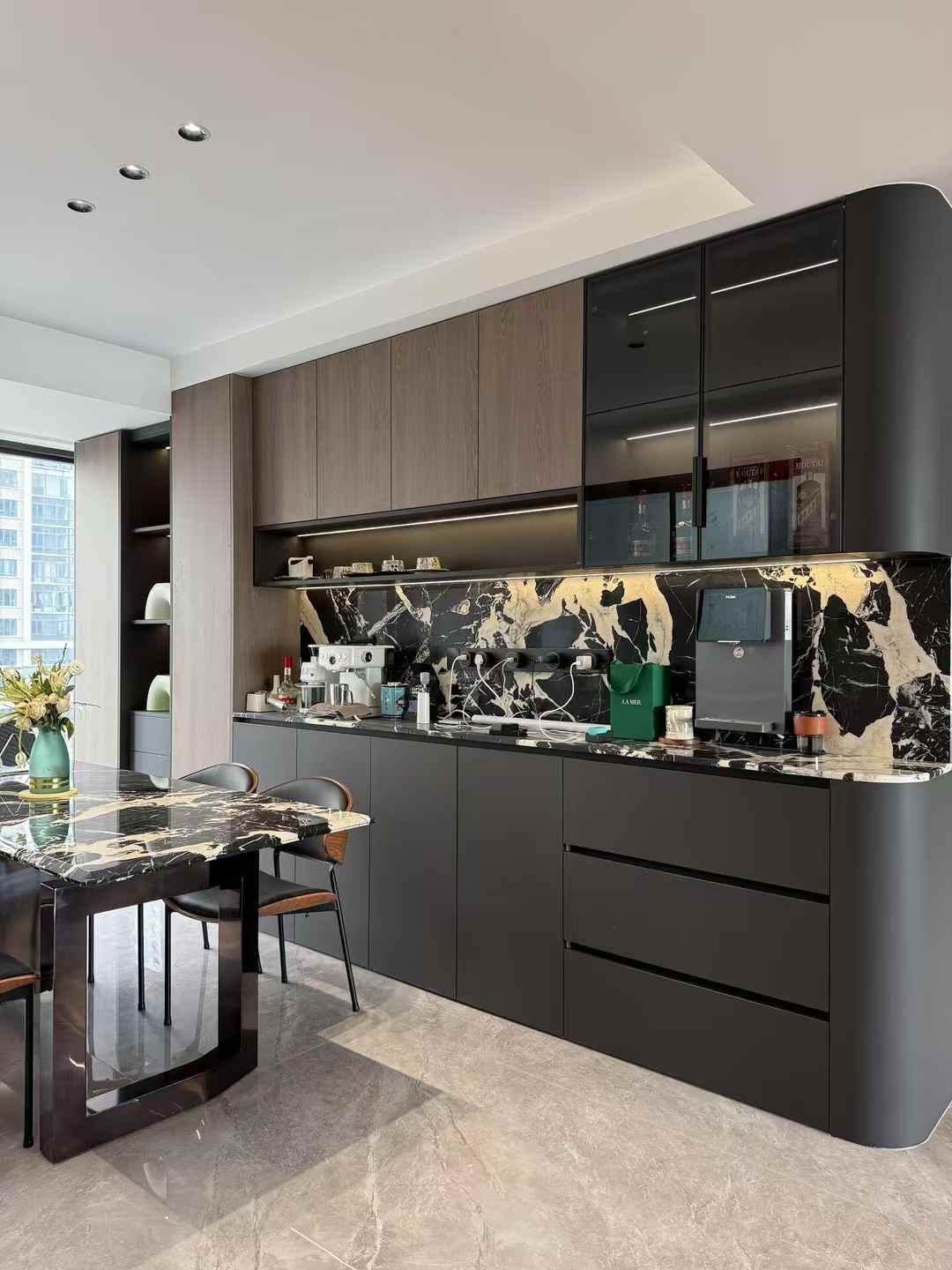
The standard quality-inspection scope includes chemical safety testing, physical and mechanical performance testing, structural safety inspection, and appearance and size testing. None of the supplied fields states a humidity rating, moisture limit, or humidity-cycle procedure. Buyers should therefore define the warehouse conditions and request an agreed sample evaluation with dimensional records before and after exposure.
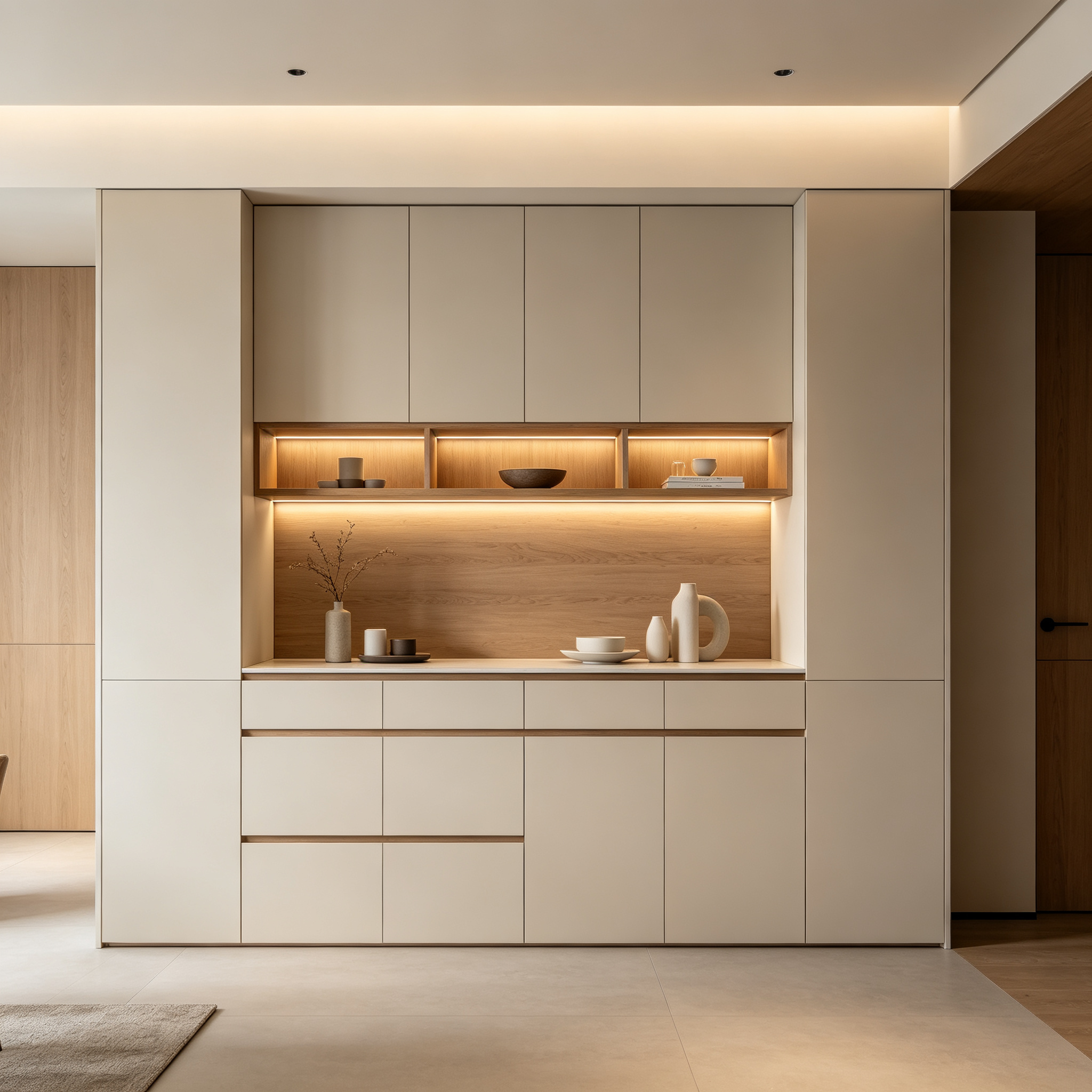
The company’s reported African project experience includes whole-house custom furniture and broader building-material procurement. Customer feedback in the supplied case data describes durability, reliability, and appearance under high temperatures, high humidity, and strong ultraviolet exposure, but this broad project record should not replace product-specific warehouse testing for the selected sideboard construction.
For procurement control, the listed minimum order quantity is one unit and the stated delivery time is 25 to 30 days, depending on the process. A one-unit sample can be used to confirm drawings, finish coverage, dimensions, structural condition, and appearance before a larger order proceeds.
Data/Solution Comparison
| Listed substrate | Documented humidity rating | Available surface-treatment set | Recommended verification action |
|---|---|---|---|
| Multi-layer solid wood board | Not provided | Melamine veneer, baking paint, PET veneer, or PVC film coating listed at product level | Test a finished sample under the intended warehouse conditions and record dimensional results |
| Particle board | Not provided | Melamine veneer, baking paint, PET veneer, or PVC film coating listed at product level | Confirm the selected finish, edge treatment, joint construction, and acceptance criteria in writing |
| European pine board | Not provided | Melamine veneer, baking paint, PET veneer, or PVC film coating listed at product level | Inspect the approved sample for structure, appearance, dimensions, and treatment coverage |
| Density board | Not provided | Melamine veneer, baking paint, PET veneer, or PVC film coating listed at product level | Require project-specific humidity exposure testing before bulk production |
The surface treatments are listed as general product options; the supplied data does not map every treatment to every substrate. Compatibility and the final material combination should be confirmed during technical review rather than assumed from the option list.
Frequently Asked Questions (FAQ)
Which listed cabinet board is best for a humid warehouse?
The supplied product information does not rank multi-layer solid wood board, particle board, European pine board, and density board by humidity stability. Compare finished samples under the actual storage conditions and select the construction that meets documented dimensional, structural, and appearance criteria.
Does a surface treatment prove that the cabinet is humidity resistant?
No humidity-resistance rating is included in the product data. Melamine veneer, baking paint, PET veneer, and PVC film coating are available treatments, but the selected finish and its application details still require confirmation and testing on the complete cabinet.
What should be approved before a bulk cabinet order?
Approve the substrate, surface treatment, customizable color, stated 1.8 mm thickness, DTC accessories, drawings, dimensions, inspection criteria, and humidity-exposure method. The minimum order quantity of one supports sample verification, while the listed production lead time is 25 to 30 days depending on the process.
Final Conclusion & Recommendations
For humid warehouses, use a sample-led specification rather than relying on an undocumented material ranking. Select one of the four available substrates, define the melamine, baking-paint, PET, or PVC treatment in detail, and combine the listed chemical, mechanical, structural, appearance, and dimensional inspections with a warehouse-specific humidity test. The business model supports an order quantity from one unit, and the group’s broader policy includes technical support, a 10-year warranty, and lifetime maintenance; the CE certificate applies to kitchen cabinets and should not be treated as a humidity-performance certificate. For detailed technical solutions or support, please reach out via 18144733878@139.com
About Us
Guangzhou Lingyin Building Materials Co., Ltd. supplies system windows and doors, aluminum products, sunrooms, whole-house customization, wardrobes, and cabinets for residential, hospitality, apartment, commercial, and municipal projects, with a primary focus on African markets. Established in 1990, the group operates a 30,000-square-meter intelligent production base and employs 186 people. Its service system covers research and development, design, manufacturing, customs clearance, logistics, and overseas technical support, and it has served clients across multiple industries. Its listed credentials include CE certification for kitchen cabinets and RoHS certification for aluminum windows.
Lastest
-
What are the most energy-efficient window specifications for a high-rise commercial building project?
2026-08-15 -
What is the best way to verify if a handrail supplier is a real factory or just a trading company?
2026-08-15 -
Is a 30% deposit and 70% against the bill of lading standard for ordering a custom sunroom?
2026-08-15 -
Can I get a small mockup sample of a glass curtain wall before placing a bulk order?
2026-08-15 -
Are manufacturers willing to customize the size and smart lock cutouts for a commercial door?
2026-08-15
SUBSCRIBE
INQUIRY