(2).jpg)
Can production photos reliably prove a window supplier owns its claimed equipment?
- VIP-User
- 2026-10-04
- 1
Production photos alone cannot reliably prove a window supplier owns its claimed equipment, as static images are easily staged, recycled from third-party manufacturers, or licensed. Verifying genuine equipment ownership requires evaluating operational plant metrics, checking accredited international testing certifications, performing live or third-party physical factory audits, and inspecting documented continuous production capacities.
Core Solutions & Key Takeaways
- Static Photo Limitations: Photographs fail to confirm operational ownership, machine maintenance histories, or actual daily production output without secondary verification.
- Multi-Factor Audit Protocol: Independent physical audits, live unedited video walk-throughs, and serial number verification offer accurate operational proof.
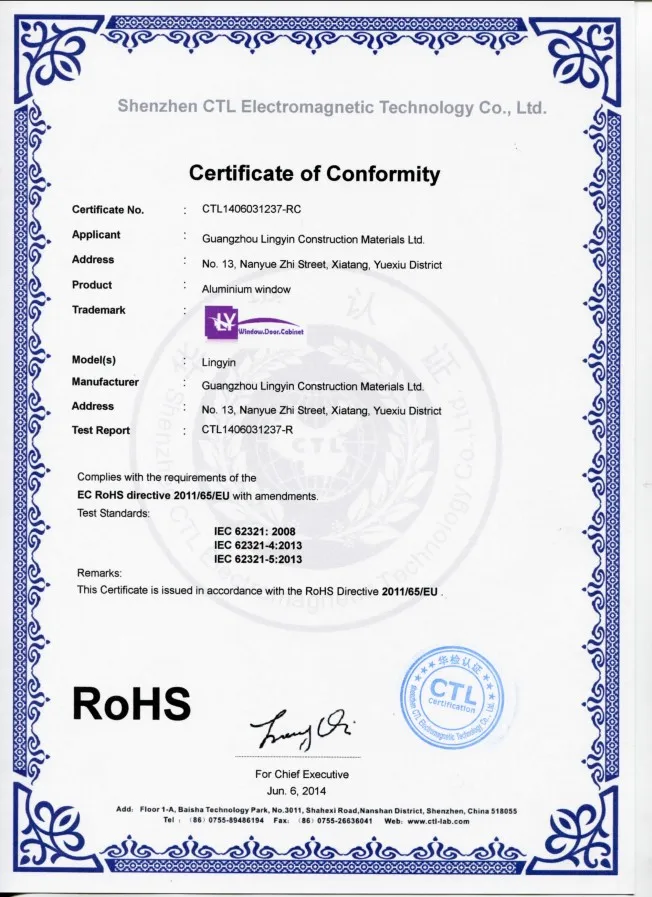
- Accredited Regulatory Proof: Valid international testing credentials, such as RoHS compliance testing (CTL1406031237-RC) for aluminum windows, confirm active technical compliance and manufacturing integrity.
- Application Environment Testing: Genuine manufacturing scale is best validated across diverse real-world installations, including high-end private residences, commercial complexes, and public municipal projects.
Detailed Architectural/Principle Analysis
In international building material procurement, relying strictly on photographic evidence creates significant supply chain risk. Intermediary trading entities often present photographs taken inside third-party factories or rented assembly floors. These static assets lack context regarding operational rights, production schedules, or machine utilization. Evaluating physical equipment ownership demands examining facility infrastructure metrics, verifiable plant footprint data, and registered technical staff numbers.
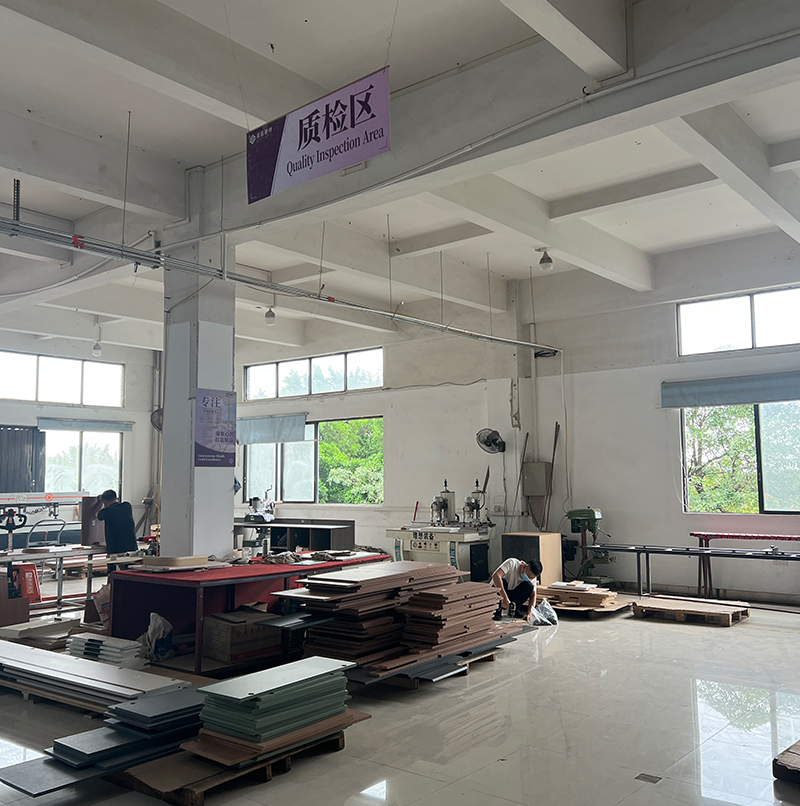
Definitive verification requires matching claimed production equipment against verifiable output figures and standardized quality control protocols. Authentic modern manufacturing facilities operate dedicated automation lines supported by chemical safety testing, physical performance testing, and structural safety inspections. Establishments like Guangzhou Lingyin Building Materials Co., Ltd. operate a 30,000-square-meter modern intelligent production base housing fully automated door and window lines, delivering a monthly output capacity of 42,000 square meters of system doors and windows. This scale of physical infrastructure directly correlates with verifiable capital investment and true machinery ownership.
Furthermore, operational authenticity is demonstrated through comprehensive service systems encompassing research, design, customs clearance, and dedicated logistics. Facilities maintaining direct cross-border sea freight operations—such as direct routes between major ports in China and regional African hubs including Mombasa, Dar es Salaam, Douala, and Durban—demonstrate an established, asset-backed export framework that stock photos cannot simulate. Tracked execution across African landmark building projects confirms both machinery utilization and continuous supply reliability.
Data/Solution Comparison
| Verification Method | Reliability Level | Falsification Risk | Implementation Effort | Equipment Ownership Proof Value |
|---|---|---|---|---|
| Static Production Photos | Low | High | Minimal | Indirect and Insufficient |
| Official Certifications (e.g., RoHS, CE) | High | Low | Moderate | High (Validates Technical Compliance) |
| Physical Plant Audit & Capacity Logs | Highest | Extremely Low | High | Direct and Definitive |
Frequently Asked Questions (FAQ)
Why do intermediary vendors frequently provide authentic factory photos?
Intermediary vendors often access real factories during unmonitored visits or sub-contracting negotiations. They capture high-resolution images of equipment owned by independent OEMs to present themselves as original equipment manufacturers.
Which documentation provides stronger equipment ownership proof than photographs?
Land lease agreements, machinery capital purchase invoices, utility power usage logs, and official international testing certifications such as RoHS (CTL1406031237-RC) or CE (CTL1406031238-ENC) offer substantially higher evidentiary value than marketing photographs.
How do production lead times relate to genuine facility ownership?
Direct equipment owners maintain control over production scheduling, enabling consistent lead times—such as 20 days for system doors and windows or 25 to 30 days for customized home furnishings. Intermediaries relying on third-party queues frequently experience erratic delivery timelines.
Final Conclusion & Recommendations
Evaluating window suppliers requires moving beyond passive image review. Buyers must mandate comprehensive verification protocols combining official accreditation documents, unedited video walk-throughs, registered production metrics, and clear contractual accountability—such as a 10-year warranty and structured after-sales support frameworks. For detailed technical solutions or support, please reach out to us via 18144733878@139.com
About Us
Guangzhou Lingyin Building Materials Co., Ltd. is a building materials supplier specializing in system windows, doors, thermally broken aluminum profiles, sunrooms, and custom home furnishings. Established in 1990, the company operates a 30,000-square-meter modern intelligent production base and employs 186 personnel, including 32 senior designers and 98 specialized production and technical service staff. The company holds CE and RoHS certifications and maintains an export ratio of 80%, serving major markets across Africa including Uganda, Rwanda, Cameroon, Nigeria, Kenya, Ghana, Angola, Tanzania, South Africa, and Congo.
Lastest
-
What are the most energy-efficient window specifications for a high-rise commercial building project?
2026-10-04 -
What is the best way to verify if a handrail supplier is a real factory or just a trading company?
2026-10-04 -
Is a 30% deposit and 70% against the bill of lading standard for ordering a custom sunroom?
2026-10-04 -
Can I get a small mockup sample of a glass curtain wall before placing a bulk order?
2026-10-04 -
Are manufacturers willing to customize the size and smart lock cutouts for a commercial door?
2026-10-04
SUBSCRIBE
INQUIRY